How to Select the Right Batch Weighing System for Your Manufacturing Plant
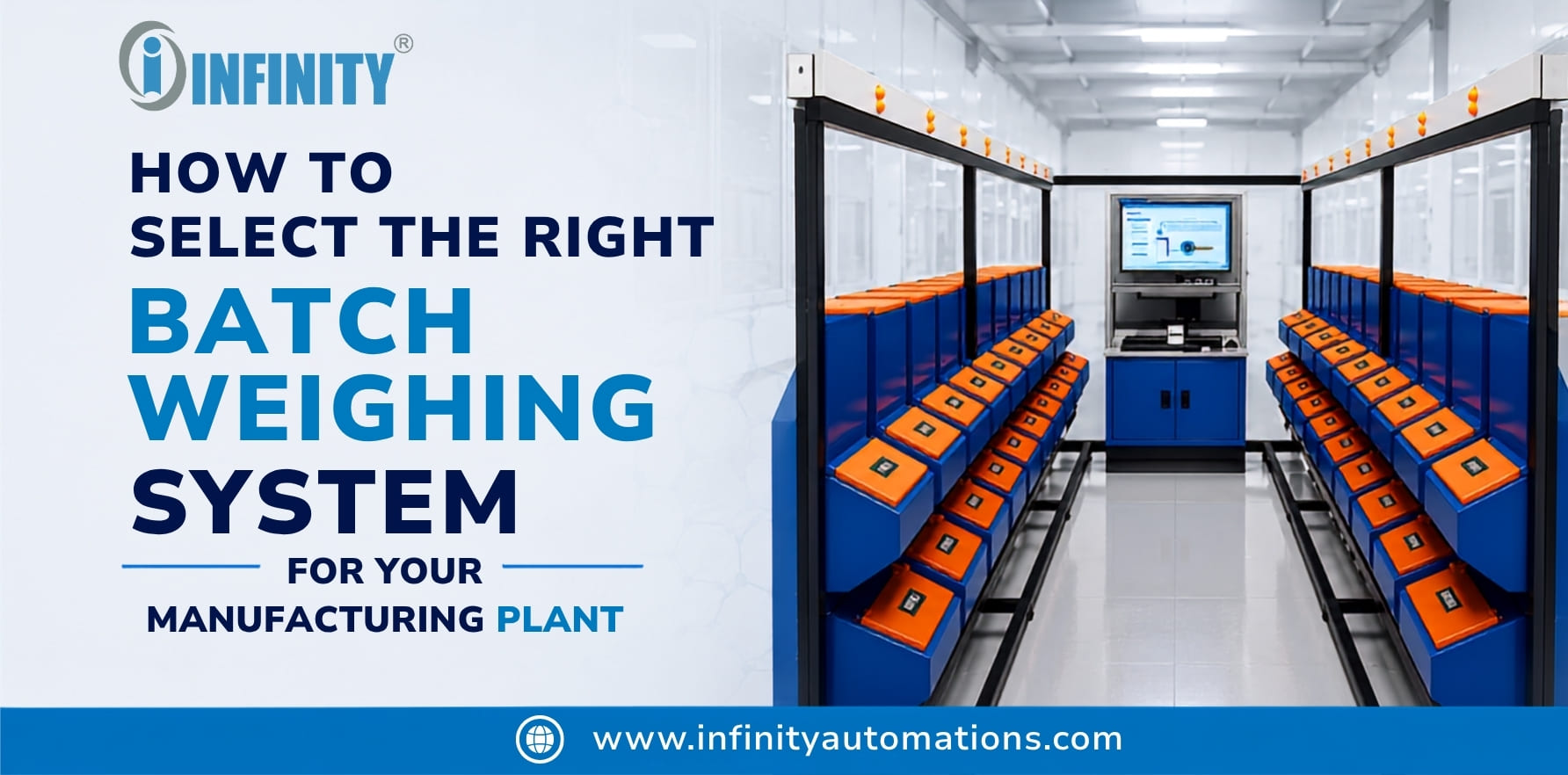
To select the right Batch Weighing System, evaluate production capacity, batch size, ingredient count, material characteristics, required weighing accuracy, automation level, recipe flexibility, system integration, service support and future scalability. The selected system should meet current production requirements while allowing the plant to expand and automate over time.
In today's competitive manufacturing environment, accurate material weighing is critical for maintaining product quality, reducing raw material wastage, improving production efficiency, and ensuring consistent batch formulation. Whether you manufacture food products, chemicals, pharmaceuticals, plastics, rubber compounds, construction materials, fertilizers, or animal feed, the performance of your weighing system directly impacts profitability and customer satisfaction.
As production volumes grow and quality standards become more stringent, manufacturers are increasingly replacing manual weighing with automated solutions. A modern Batch Weighing Machine not only improves Weighing Accuracy but also enhances traceability, recipe management, and production control.
However, choosing the right system is not simply about purchasing weighing equipment. Factors such as production capacity, material characteristics, accuracy requirements, automation level, and future scalability all influence the selection process.
This comprehensive guide explains How to Select a Batch Weighing System for your manufacturing plant, covering the key technical considerations, system components, automation features, industry applications, and best practices to help you make a well-informed investment.
What is a Batch Weighing System?
A Batch Weighing System is an automated material weighing and batching solution designed to measure, dose, and transfer raw materials according to predefined production recipes.
Unlike manual weighing, automated systems use precision load cells, feeders, programmable controllers, and software to ensure each ingredient is dispensed within specified tolerances.
A modern Batch Weighing Machine typically consists of:
- Weighing hopper
- Load cells
- Material feeders
- Batch controller
- PLC control panel
- Human Machine Interface (HMI)
- Pneumatic gates
- Material transfer system
- Data logging software
These components work together to provide accurate, repeatable, and efficient ingredient batching.
Why Choosing the Right Batch Weighing System Matters
The right weighing system directly affects production quality and operational efficiency.
An unsuitable system can result in:
- Inconsistent batches
- Material wastage
- Increased labor costs
- Production downtime
- Poor traceability
- Higher maintenance expenses
On the other hand, selecting the appropriate Industrial Weighing Solution can help manufacturers:
- Improve product consistency
- Reduce raw material losses
- Increase production capacity
- Enhance quality control
- Lower operating costs
- Support future automation
Key Factors to Consider When Selecting a Batch Weighing System
Production Capacity
The first step is determining how much material your plant processes. Consider batch size, number of batches per day, peak production requirements, and future expansion plans. A system that is too small can restrict production, while an oversized system may increase unnecessary investment.
Number of Ingredients
Manufacturing processes vary considerably. Some applications require two or three ingredients, while others may require twenty or more materials. Choose a system that supports all required ingredients while allowing future recipe expansion.
Material Characteristics
Different raw materials behave differently during weighing. Evaluate powders, granules, pellets, liquids, sticky materials, fine chemicals, and abrasive products. Material properties determine the type of feeders, valves, and weighing hoppers required.
Required Weighing Accuracy
Weighing Accuracy is one of the most important selection criteria. Ask yourself: What tolerance is acceptable? Are micro ingredients involved? Does product quality depend on exact formulation? Applications such as pharmaceuticals and specialty chemicals require much tighter tolerances than construction materials. High-quality load cells and intelligent control algorithms help maintain consistent accuracy across every batch.
Automation Requirements
Modern manufacturers increasingly prefer Automatic Weighing Equipment. Automation can include automatic material feeding, recipe management, batch sequencing, automatic discharge, production reporting, and alarm management. The higher the automation level, the lower the dependency on manual operations.
Production Flexibility
Many manufacturers produce multiple products. Choose a system capable of storing multiple recipes and allowing quick changeovers without extensive manual adjustments.
Future Expansion
Manufacturing requirements often change over time. Select equipment that can be upgraded with additional ingredient stations, new feeders, larger weighing hoppers, advanced software, and production monitoring systems. Scalable systems provide better long-term value.
Types of Batch Weighing Machines
Different production environments require different machine configurations.
Semi-Automatic Batch Weighing Machine
Features: Manual material loading, automatic weighing, and lower investment.
Suitable for: Small manufacturing plants, pilot production, and low-volume operations.
Fully Automatic Batch Weighing Machine
Features: Automatic feeding, PLC control, recipe management, automatic discharge, and production reports.
Ideal for: Medium- and large-scale manufacturing, continuous production, and high-volume batching.
Understanding Weighing Accuracy
The quality of finished products depends heavily on weighing precision.
Factors influencing Weighing Accuracy include load cell quality, feeder performance, material flow characteristics, calibration, environmental conditions, mechanical vibration, and software algorithms.
Investing in precision weighing components reduces material variation and improves product consistency.
Importance of PLC-Based Automation
A PLC Weighing System controls the entire batching process.
Functions include ingredient sequencing, weight monitoring, feeder control, batch completion, alarm handling, data logging, and safety interlocks.
PLC automation ensures every production cycle follows the same programmed sequence, improving consistency and reducing operator dependency.
Selecting the Right Batch Controller
The Batch Controller is the central control unit of the weighing system.
Recipe Management
Ability to store multiple formulations.
User Interface
A touchscreen HMI simplifies operation and reduces training requirements.
Reporting
The controller should generate batch reports, production history, material consumption, and alarm logs.
Connectivity
Support for Ethernet, Modbus, OPC UA, Profibus, and Profinet enables integration with plant automation systems.
Integration with Manufacturing Systems
Modern Industrial Weighing Solutions should integrate with existing production infrastructure.
ERP Systems
Synchronize production planning, inventory, and batch records.
MES Software
Track production in real time and improve traceability.
SCADA Systems
Monitor plant performance and process data from a central location.
Material Handling Equipment
Integrate with screw conveyors, bucket elevators, pneumatic conveying, and belt conveyors.
Packaging Systems
Automated transfer to downstream packaging or processing equipment improves productivity.
Industry Applications
Batch weighing systems are widely used across multiple industries.
Food Processing
Applications include flour, sugar, spices, dairy ingredients, and beverage powders.
Chemical Manufacturing
Used for resins, pigments, additives, solvents, and powders.
Pharmaceutical Industry
Supports accurate ingredient dosing while maintaining regulatory compliance.
Rubber Industry
Automates carbon black weighing, rubber compounding, and ingredient batching.
Plastics Industry
Suitable for polymer granules, masterbatch, fillers, and additives.
Construction Materials
Applications include cement, fly ash, sand, and chemical admixtures.
Animal Feed
Ensures consistent nutritional formulations.
Common Buying Mistakes
The most common Batch Weighing System buying mistakes are focusing only on purchase price, ignoring future capacity, selecting low-quality load cells, overlooking software and automation capabilities, and failing to evaluate service and spare-parts support.
- Ignoring Future Expansion: Choose equipment that supports future production growth.
- Selecting Low-Quality Load Cells: Poor weighing sensors reduce accuracy and increase maintenance costs.
- Overlooking Software Features: Recipe management and production reporting are essential for modern manufacturing.
- Underestimating Automation Benefits: Automation reduces labor costs and improves production consistency.
- Choosing Equipment Without Service Support: Reliable after-sales service and spare parts availability are critical for minimizing downtime.
Information to Prepare Before Selecting a Batch Weighing System
Before contacting a supplier, prepare the following information:
- Required batch size
- Number of ingredients
- Material type and density
- Target weighing accuracy
- Required production rate
- Number of batches per hour/day
- Existing PLC/automation architecture
- ERP/MES/SCADA requirements
- Available installation space
- Future expansion requirements
Future Trends in Industrial Weighing Solutions
Industry 4.0 continues to transform manufacturing.
Emerging technologies include:
- AI-assisted recipe optimization
- IoT-enabled monitoring
- Predictive maintenance
- Cloud-based production analytics
- Digital batch records
- Remote diagnostics
- Automatic calibration
- Machine learning for process optimization
- Energy-efficient weighing systems
These innovations improve productivity while maintaining exceptional weighing accuracy.
Comparison Checklist
Use this checklist to compare Batch Weighing Systems before requesting quotations or finalizing equipment specifications.
| Selection Factor | Why It Matters |
|---|---|
| Production Capacity | Supports current and future output |
| Ingredient Count | Handles all required materials |
| Weighing Accuracy | Ensures consistent product quality |
| Automation Level | Reduces labor and errors |
| PLC Weighing System | Controls recipes and sequencing |
| Batch Controller | Enables reporting and traceability |
| Material Handling | Improves workflow efficiency |
| ERP/MES Integration | Supports digital manufacturing |
| Service Support | Reduces downtime |
| Future Scalability | Protects long-term investment |
About Infinity Automation Systems Private Limited
Infinity Automation Systems Private Limited is an industrial automation and testing solutions company based in Pimpri-Chinchwad, Pune. The company provides automation and quality inspection solutions for manufacturing applications, including batch weighing systems, leak testing, plastic welding and automated production processes.
Need Help Selecting the Right Batch Weighing System?
Share your batch size, number of ingredients, material characteristics, weighing accuracy requirements and production capacity with our team. Infinity Automation Systems can help you evaluate the right automation and weighing configuration for your manufacturing process.
Discuss Your Batch Weighing Requirement → Explore Batch Weighing Solutions →Conclusion
Understanding How to Select a Batch Weighing System is essential for manufacturers seeking higher productivity, improved product quality, and long-term operational efficiency. The right Batch Weighing Machine should not only meet your current production requirements but also provide the flexibility to support future growth and automation.
Key considerations such as production capacity, material characteristics, Weighing Accuracy, automation level, software capabilities, and system integration all play an important role in selecting the most suitable solution. Investing in high-quality Automatic Weighing Equipment equipped with a reliable Batch Controller and PLC Weighing System can significantly reduce material wastage, improve recipe consistency, and streamline manufacturing operations.
As Industry 4.0 continues to reshape industrial production, advanced Industrial Weighing Solutions with AI, IoT, cloud connectivity, and predictive maintenance capabilities will become increasingly valuable. Choosing a scalable, automation-ready system today will help your manufacturing plant remain competitive, efficient, and prepared for future production demands.
Frequently Asked Questions (FAQs)
Evaluate production capacity, ingredient count, required weighing accuracy, automation level, scalability, software features, and system integration before making a decision.
A PLC Weighing System automates ingredient sequencing, recipe execution, feeder control, data logging, and safety functions, helping ensure consistent batch quality.
A Batch Controller manages recipes, monitors weights, controls feeders, records production data, and coordinates the weighing process.
Food processing, chemicals, pharmaceuticals, plastics, rubber, construction materials, fertilizers, and animal feed manufacturing commonly use automated batch weighing systems.
Automatic Weighing Equipment reduces human error, increases weighing accuracy, improves traceability, minimizes material wastage, and enhances production efficiency.
Consider production capacity, batch size, ingredient count, material characteristics, required weighing accuracy, automation level, recipe flexibility, future expansion, system integration and after-sales support.
A semi-automatic system may require manual material loading while performing weighing automatically. A fully automatic system can include automatic feeding, PLC control, recipe management, automatic discharge and production reporting, making it more suitable for higher-volume manufacturing.
Material characteristics directly influence the selection of feeders, valves and weighing hoppers. Powders, granules, pellets, liquids, sticky materials, fine chemicals and abrasive products can require different handling and weighing arrangements.
Yes. Modern Industrial Weighing Solutions can integrate with ERP and MES systems to synchronize production planning, inventory, batch records, production monitoring and traceability.
Manufacturing requirements can change as production grows. A scalable system can accommodate additional ingredient stations, feeders, larger weighing hoppers, software upgrades and production monitoring systems, helping protect the long-term investment.