
Batch Weighing System vs Manual Weighing: Which is Better for Modern Manufacturing?
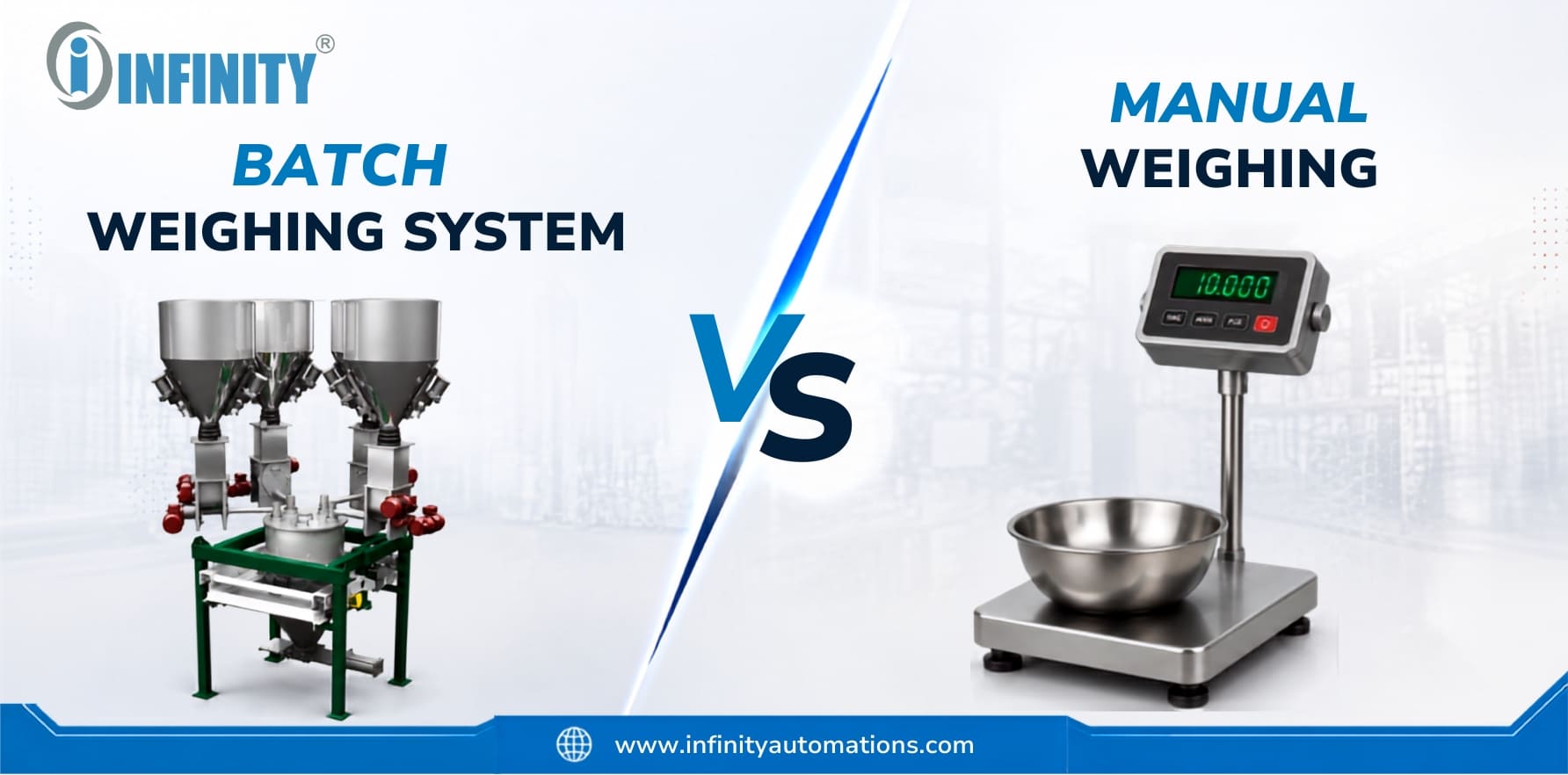
Accurate material measurement is one of the most important requirements in modern manufacturing. Whether a factory produces chemicals, plastics, food products, pharmaceuticals, construction materials, automotive components, or other industrial products, the accuracy of raw material quantities directly affects product quality, production efficiency, and operating costs.
Traditionally, many manufacturing facilities have relied on manual weighing, where operators measure and add individual materials according to a predefined recipe. While manual weighing can work for small-scale or low-volume operations, it can become challenging as production volumes increase.
A Batch Weighing System provides an automated alternative by accurately measuring and dispensing multiple materials according to predefined batch recipes. The system can integrate weighing equipment, sensors, controllers, material handling equipment, and software to automate the batching process.
So, which approach is better?
Batch Weighing System vs Manual Weighing is not simply a comparison of two weighing methods. It is a comparison between manual process dependency and automated manufacturing control.
This guide explains the differences between manual weighing and automated batch weighing systems, including accuracy, productivity, labor requirements, repeatability, material handling, data tracking, maintenance, cost, and applications.
What is a Batch Weighing System?
A Batch Weighing System is an automated industrial weighing solution designed to accurately measure predefined quantities of one or more raw materials before they are processed, mixed, or transferred to the next manufacturing stage.
The system typically uses:
- Load cells
- Weighing hoppers
- Sensors
- PLC controllers
- Control panels
- Pneumatic or electrically operated valves
- Conveyors or feeders
- Material storage bins
- Recipe management software
- HMI interfaces
Depending on the application, the system can automatically control the complete sequence of material feeding, weighing, batching, and discharge.
For example, if a manufacturing recipe requires three different materials in specific quantities, the system can automatically feed each material into the weighing hopper, measure the required quantity, and transfer the completed batch to the next stage.
This reduces manual intervention and helps maintain consistency between production batches.
What is Manual Weighing?
Manual Weighing involves an operator measuring individual materials using weighing scales or other measuring equipment.
A typical manual process may involve:
- Reading the production recipe.
- Selecting the required material.
- Placing the container on the weighing scale.
- Adding material manually.
- Checking the measured quantity.
- Recording the measurement.
- Repeating the process for other materials.
- Transferring the materials for further processing.
Manual weighing can be suitable when production quantities are relatively small or recipes change frequently. However, as production volume increases, manual operations can become more time-consuming and dependent on operator accuracy.
How Does a Batch Weighing System Work?
The exact configuration depends on the manufacturing process, but a typical automated batch weighing process includes the following steps.
Recipe Selection
The operator selects a predefined recipe through the HMI or control system. The recipe contains information such as material name, target quantity, feeding sequence, tolerance limits, batch quantity, and number of batches.
Material Feeding
The control system activates the appropriate feeder, valve, conveyor, screw feeder, or other material-handling mechanism.
Weighing
The material enters the weighing hopper. Load cells continuously measure the material quantity.
Target Quantity Detection
When the measured weight approaches the target value, the control system can adjust the feeding process to reduce overshooting.
Batch Completion
Once the required quantities are achieved within the configured tolerance, the system confirms the batch.
Material Discharge
The weighed material is discharged into the mixer, conveyor, processing machine, or subsequent production stage.
Data Recording
Depending on the system configuration, batch information can be recorded for production monitoring and traceability.
Manual Weighing vs Batch Weighing System
The biggest difference between the two methods is the level of automation.
| Parameter | Manual Weighing | Batch Weighing System |
|---|---|---|
| Material Measurement | Operator controlled | Automated |
| Accuracy | Operator dependent | Sensor and control based |
| Repeatability | Variable | High |
| Production Speed | Lower | Higher |
| Labor Requirement | Higher | Lower |
| Recipe Management | Manual | Automated |
| Data Recording | Often manual | Can be automated |
| Batch Traceability | Limited | Better |
| Human Error | Higher potential | Reduced |
| Material Handling | Manual | Automated/controlled |
| Process Monitoring | Limited | Real-time possible |
| Scalability | Limited | High |
| Integration | Limited | PLC/MES/ERP possible |
| Initial Investment | Lower | Higher |
| Long-Term Automation | Limited | Excellent |
Accuracy Comparison
Manual Weighing
Manual weighing accuracy depends on several factors: operator experience, scale readability, material properties, measuring technique, environmental conditions, human attention, and recording accuracy. Small variations may occur between batches, particularly when several materials need to be measured repeatedly.
Batch Weighing System
An Automatic Batch Weighing System uses sensors and programmed control logic to measure materials according to predefined targets. The system can monitor actual weight, target weight, weight tolerance, feeding status, batch status, and alarm conditions. This helps reduce variations caused by manual intervention.
Winner: Batch Weighing System – For repetitive production processes where consistent material quantities are important, automated weighing generally provides better repeatability.
Production Speed Comparison
Manual weighing requires an operator to perform each weighing step. When many materials are involved, the cumulative time required for material selection, weighing, recording, verification, and transfer can become significant.
A Batch Weighing System can automate these repetitive operations and coordinate material feeding according to a programmed sequence.
Winner: Batch Weighing System – Automated batching is particularly valuable for medium- and high-volume manufacturing.
Labor Requirement
Manual weighing requires operators for most stages of the process. With automation, operators can instead focus on monitoring the process, material replenishment, quality checks, exception handling, and production supervision.
Automation does not necessarily eliminate personnel. Instead, it can shift operators away from repetitive measurement tasks toward higher-value activities.
Human Error
Manual weighing can introduce errors such as selecting the wrong material, entering incorrect quantities, over-weighing, under-weighing, incorrect recording, skipping a material, or mixing up recipes.
A properly configured Batch Weighing System can reduce many of these process-related errors by using programmed recipes and automated control sequences. However, automation still requires correct system configuration, calibration, maintenance, and operator supervision.
Recipe Management
Recipe management is another major advantage of automated batching. A manufacturing facility may have multiple product formulations. An automated system can store predefined recipes containing material identification, target quantities, tolerance values, feeding sequence, batch size, and process parameters. Operators can select the appropriate recipe rather than manually calculating each material quantity.
Material Handling
Manual weighing often requires operators to physically move materials between storage areas, weighing scales, containers, mixing equipment, and production lines. An automated system can connect weighing equipment with material handling systems such as conveyors, screw feeders, hoppers, pneumatic systems, valves, pumps, and dosing equipment. This can create a more integrated production process.
Data Logging and Traceability
Modern manufacturing increasingly requires production data to be recorded and analyzed. Depending on system design, an Industrial Batch Weighing System can record information such as batch number, recipe, material, target quantity, actual quantity, date and time, operator, production status, and alarm history. This information can support quality control, production analysis, and traceability.
Manual systems may require separate documentation or spreadsheet-based recording, increasing administrative effort and the possibility of recording errors.
Cost Comparison
Manual Weighing
Manual weighing generally has a lower initial equipment investment. However, long-term costs may include operator labor, production time, material wastage, rework, batch variation, manual documentation, and process inefficiencies.
Batch Weighing System
An automated system generally requires a higher initial investment because it may include load cells, weighing hoppers, PLC, HMI, control panel, feeders, valves, conveyors, sensors, automation software, and integration. However, the investment can be justified when production volume, repeatability, traceability, and labor efficiency are important.
Important Point: The lowest initial purchase price is not always the lowest total cost of ownership. Manufacturers should consider both initial investment and long-term operating costs.
Maintenance Comparison
Manual Weighing – Maintenance requirements may primarily involve scale calibration, cleaning, inspection, battery or electrical maintenance, and mechanical checks.
Automated Batch Weighing System – An automated system may require maintenance of load cells, feeders, valves, pneumatic components, sensors, PLC, HMI, electrical panels, conveyors, and mechanical components. Preventive maintenance is important to maintain weighing accuracy and system availability.
Scalability
Manual weighing can become difficult to scale when production volume increases, more recipes are introduced, more materials are added, batch frequency increases, or traceability requirements become stricter. Automated batching can be expanded through additional weighing stations, material bins, feeders, hoppers, conveyors, and control systems. This makes automated systems more suitable for growing manufacturing operations.
Industries Using Batch Weighing Systems
Batch Weighing Systems are applicable across many manufacturing sectors.
Chemical Manufacturing
Used for accurately batching powders, granules, liquids, additives, and chemical ingredients.
Plastic and Polymer Manufacturing
Applications may include polymer materials, additives, masterbatch, fillers, and recycled materials.
Food Processing
Batch weighing can be used for ingredients, flour, sugar, powders, spices, and additives. Food applications require appropriate hygienic design and process controls.
Pharmaceutical Manufacturing
Automated weighing can support controlled material dispensing where accuracy, documentation, and traceability are important. Specific pharmaceutical applications must be designed according to applicable regulatory and validation requirements.
Construction Materials
Applications include batching cement, sand, aggregates, additives, and powders.
Automotive Manufacturing
Automated weighing can be used in processes involving compounds, resins, adhesive materials, process additives, and other controlled material mixtures.
A properly designed Automatic Batch Weighing System can provide several benefits: Improved repeatability, reduced manual intervention, higher productivity, better recipe control, reduced material wastage, improved traceability, production integration, and better process monitoring.
Manual weighing can still be useful, but manufacturers should consider its limitations: Higher operator dependency, lower production speed, greater potential for human error, manual documentation, limited scalability, batch-to-batch variation, and greater repetitive workload.
When Should You Choose Manual Weighing?
Manual weighing can be appropriate when:
- Production volume is low
- Batch sizes are small
- Recipes change frequently
- Initial investment must remain low
- Automation is not economically justified
- The process is still under development
- Material quantities are relatively simple
For these applications, a manual process may provide sufficient flexibility.
When Should You Choose a Batch Weighing System?
A Batch Weighing System becomes more attractive when:
- Production volume is high
- Multiple materials must be weighed
- Repeatability is important
- Recipes are standardized
- Labor costs are significant
- Traceability is required
- Material wastage needs to be controlled
- Production needs to be integrated
- Automation is part of the manufacturing strategy
Batch Weighing System and Industry 4.0
Modern manufacturing is increasingly moving toward connected and data-driven production. A modern Industrial Batch Weighing System can potentially integrate with PLC systems, SCADA, MES, ERP, Industrial IoT platforms, barcode scanners, RFID systems, cloud-based dashboards, and production analytics. This enables manufacturers to move beyond basic weighing toward integrated process automation.
What Should You Consider Before Buying a Batch Weighing System?
Before selecting a system, evaluate the following.
Material Characteristics
Consider powder, granules, pellets, liquid, sticky material, or free-flowing material. Material characteristics influence feeder and hopper selection.
Batch Size
Determine the minimum and maximum batch quantities.
Required Accuracy
Define acceptable weighing tolerance according to your production requirements.
Number of Materials
Determine how many materials need to be included in each recipe.
Production Capacity
Calculate the required batches per hour or per shift.
Automation Level
Decide whether you need manual, semi-automatic, or fully automatic operation.
Data Requirements
Determine whether you require batch reports, recipe records, production history, user management, traceability, or MES/ERP integration.
Future Expansion
Select a system that can accommodate future production requirements where practical.
Batch Weighing System vs Manual Weighing: Which is Better?
There is no single solution for every manufacturer.
Manual Weighing is Better When:
- Production is small
- Flexibility is more important than speed
- Recipes frequently change
- Investment budget is limited
- Automation requirements are low
Batch Weighing System is Better When:
- Production volume is high
- Accuracy and repeatability are important
- Multiple ingredients are involved
- Recipe control is required
- Traceability is important
- Labor efficiency matters
- Production automation is a priority
For modern high-volume manufacturing, an Automatic Batch Weighing System generally provides greater scalability, repeatability, process control, and automation potential than manual weighing.
Looking for the Right Batch Weighing Solution?
Contact Infinity Automation Systems today to discuss your material weighing requirements. Our engineering team will help you select the right solution for your manufacturing needs.
Contact Infinity Automation Systems →Conclusion
The choice between Batch Weighing System vs Manual Weighing depends on production volume, material characteristics, required accuracy, recipe complexity, labor requirements, and automation goals.
Manual weighing remains useful for low-volume production, product development, and applications where flexibility is more important than automation.
However, manufacturers handling repetitive, high-volume, multi-material batching can benefit significantly from an Industrial Batch Weighing System. Automated weighing can improve repeatability, reduce manual intervention, support recipe management, improve traceability, and provide a foundation for broader manufacturing automation.
As manufacturers move toward Industry 4.0, connected Automatic Weighing Systems can become an important part of integrated production environments.
The right solution should therefore be selected based not only on initial equipment cost but also on productivity, accuracy, labor requirements, material wastage, scalability, maintenance, and long-term manufacturing objectives.
Frequently Asked Questions
A Batch Weighing System is an automated weighing solution that measures predefined quantities of one or more materials according to a production recipe before transferring them to the next manufacturing process.
Manual weighing requires an operator to measure and record materials, while a Batch Weighing System automates material feeding, measurement, recipe control, and depending on the system, data recording.
An appropriately designed and calibrated automated system can provide better repeatability than manual weighing because material quantities are controlled using sensors, programmed targets, and predefined tolerances.
Batch Weighing Systems are used in industries such as plastics, chemicals, food processing, pharmaceuticals, construction materials, automotive manufacturing, and other industries involving controlled material batching.
Yes. Automated batch systems can be configured with multiple material bins, feeders, weighing hoppers, and control sequences to measure different materials according to predefined recipes.
Accurate material measurement and controlled feeding can help reduce over-weighing and unnecessary material consumption, although actual savings depend on the application and system design.
Yes. Industrial batch weighing systems commonly use PLC-based control and HMI interfaces for recipe selection, process monitoring, alarms, and operator control.
Depending on the system architecture, batch weighing equipment can be integrated with MES, ERP, SCADA, or other manufacturing software to support production data exchange and traceability.
Yes. Manual weighing can be suitable for low-volume production, product development, small batches, frequently changing recipes, and applications where a high level of automation is not economically justified.
An Automatic Batch Weighing System is worth considering when production volume is increasing, multiple materials must be measured repeatedly, consistent batch quality is important, manual errors need to be reduced, or production traceability and automation are required.
Important factors include material characteristics, batch size, weighing accuracy, number of materials, production capacity, feeder type, automation level, recipe management, data logging, maintenance requirements, and future expansion.
Yes. Industrial batch weighing systems can be configured around the material characteristics, number of ingredients, batch size, required accuracy, production capacity, material handling method, control architecture, and integration requirements.