Rubber Mixing Automation Using Batch Weighing Systems: Improve Accuracy and Productivity
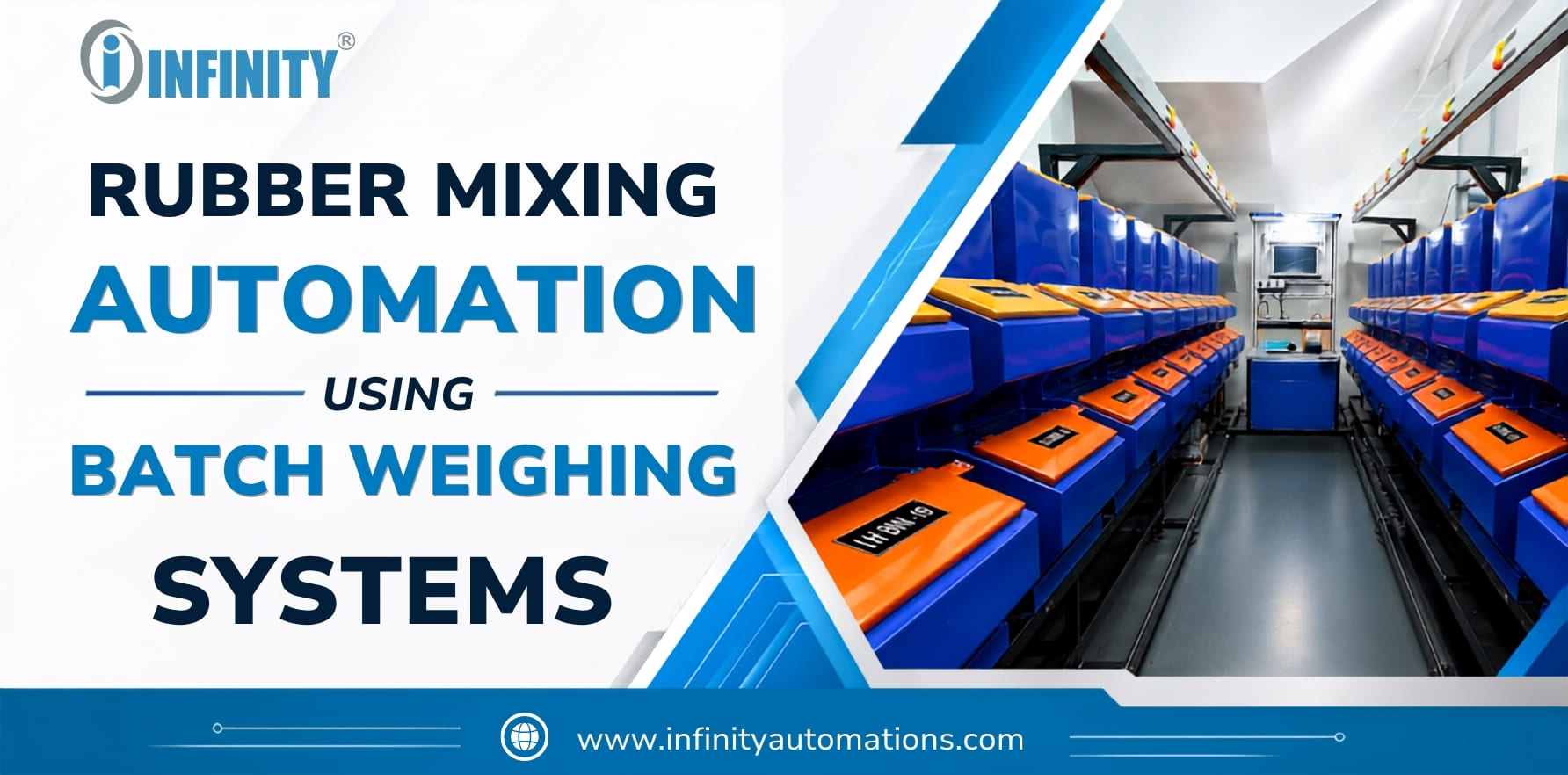
Rubber Mixing Automation uses automated weighing, dosing, batching, material handling and process-control systems to prepare rubber compounds according to predefined recipes. By combining load cells, feeders, PLC controls and recipe management, manufacturers can improve ingredient accuracy, batch consistency, traceability and production efficiency.
The rubber manufacturing industry demands exceptional precision, consistency, and efficiency to produce high-quality compounds for automotive, industrial, construction, medical, and consumer applications. Every rubber formulation consists of carefully measured raw materials, including natural rubber, synthetic rubber, carbon black, silica, oils, accelerators, antioxidants, curing agents, and other additives. Even a slight variation in ingredient proportions can significantly impact product performance, durability, hardness, elasticity, and safety.
Traditionally, many Rubber Mixing Plants relied on manual ingredient weighing, which often resulted in inconsistent batches, material wastage, increased labor costs, and production delays. As manufacturers strive to improve quality while reducing operational costs, Rubber Mixing Automation has become an essential investment.
A Batch Weighing System for the Rubber Industry automates the weighing, dosing, and batching of raw materials with high precision. Integrated with PLC controls, load cells, recipe management software, and material handling systems, these automated solutions improve Ingredient Weighing accuracy, optimize Carbon Black Weighing, and ensure consistent Rubber Compounding across every production batch.
This guide explains how Rubber Mixing Automation works, its advantages, applications, implementation process, and how a modern Batch Weighing System can transform rubber manufacturing operations.
What is Rubber Mixing Automation?
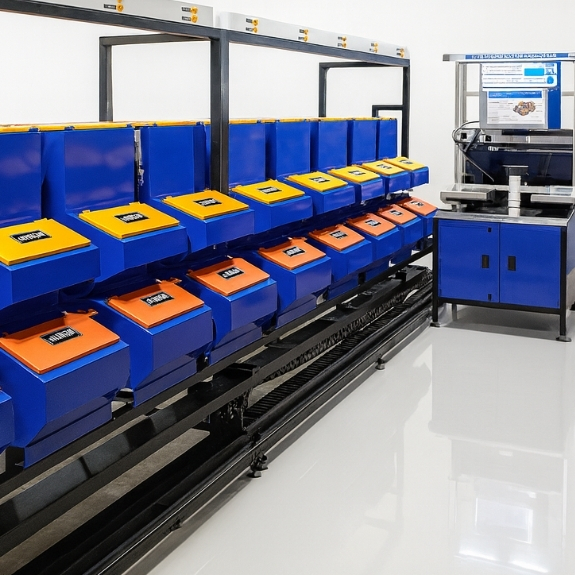
Rubber Mixing Automation is the use of automated weighing, batching, material handling, and process control systems to accurately prepare rubber compounds based on predefined recipes.
Instead of manually measuring raw materials, an automated system performs every step of the weighing process with minimal operator intervention. The system stores multiple formulations, dispenses ingredients in the correct sequence, records production data, and transfers weighed materials to the mixer automatically.
Automation ensures every batch is produced with the same level of precision, helping manufacturers maintain product quality while increasing production capacity.
Why Accurate Ingredient Weighing Matters
Rubber compounds consist of multiple ingredients, each serving a specific purpose.
Common raw materials include:
- Natural Rubber (NR)
- Styrene Butadiene Rubber (SBR)
- Nitrile Rubber (NBR)
- EPDM Rubber
- Carbon Black
- Silica
- Processing Oils
- Zinc Oxide
- Sulfur
- Accelerators
- Antioxidants
- Fillers
- Pigments
Incorrect weighing of even a single ingredient can lead to poor product quality, inconsistent hardness, reduced tensile strength, poor abrasion resistance, defective curing, increased rejection rates, and customer complaints. Accurate Ingredient Weighing is therefore one of the most critical stages in rubber manufacturing.
Challenges of Manual Rubber Mixing
Many traditional Rubber Mixing Plants still rely on manual weighing for raw materials. While suitable for small-scale production, manual methods present several challenges.
Human Errors
Operators may accidentally select the wrong material, add incorrect quantities, skip ingredients, or record incorrect values.
Inconsistent Batch Quality
Manual weighing can result in variations between batches, affecting the physical properties of finished rubber products.
Material Wastage
Overdosing expensive ingredients such as carbon black or specialty chemicals increases production costs.
Lower Productivity
Manual weighing takes longer, limiting the number of batches that can be produced each day.
Poor Traceability
Paper-based records make it difficult to track production history or investigate quality issues.
What is a Batch Weighing System for the Rubber Industry?
A Batch Weighing System for Rubber Industry is an automated solution designed to weigh, dose, and transfer raw materials according to predefined production recipes.
The system combines precision load cells, storage silos, feeders, weighing hoppers, PLC controls, and recipe management software to deliver highly accurate ingredient batches.
It eliminates manual calculations and ensures every batch is produced according to the exact formulation.
Working Principle of Rubber Mixing Automation
An automated rubber batching system follows a controlled production sequence.
Step 1: Recipe Selection
The operator selects the required rubber formulation through the HMI.
Step 2: Material Identification
The system identifies all required ingredients stored in silos, bins, or hoppers.
Step 3: Automatic Ingredient Weighing
Feeders dispense materials into the weighing hopper while load cells continuously monitor the weight.
Step 4: Carbon Black Weighing
Carbon black is dosed with high precision using enclosed feeding systems to minimize dust generation and ensure repeatability.
Step 5: Batch Verification
The PLC verifies that each ingredient meets the specified tolerance before proceeding.
Step 6: Material Discharge
The completed batch is transferred automatically to the internal mixer, Banbury mixer, or downstream processing equipment.
Step 7: Data Logging
Production data, batch numbers, ingredient weights, and operator information are automatically stored for complete traceability.
Main Components of a Batch Weighing System
A modern Batch Weighing System for Rubber Industry typically includes:
Store bulk materials such as carbon black, silica, and rubber chemicals.
Controlled feeders regulate the flow of ingredients to the weighing hopper.
Receives and measures ingredients using precision load cells.
Provide highly accurate weight measurement throughout the batching process.
Controls sequencing, dosing, interlocks, alarms, and recipe execution.
Operators can select recipes, monitor production, view alarms, generate reports, and track batch history.
Conveyors, screw feeders, or pneumatic conveying systems transport weighed ingredients to the mixer automatically.
Learn about PLC, HMI and SCADA automation
Carbon Black Weighing Automation
Carbon Black Weighing is one of the most critical processes in rubber manufacturing.
Carbon black influences tensile strength, abrasion resistance, UV resistance, conductivity, durability, and product color.
Because carbon black is lightweight and dusty, manual handling often causes material loss, dust pollution, health risks, and inconsistent dosing.
Automated weighing systems solve these issues by using enclosed storage, dust-free conveying, and precision dosing mechanisms.
Benefits:
- Accurate dosing
- Reduced dust emissions
- Improved workplace safety
- Lower material wastage
- Better batch consistency
Rubber Compounding Process
Rubber Compounding is the process of blending raw rubber with fillers, oils, chemicals, and curing agents to achieve desired mechanical properties.
A typical automated compounding process includes:
- Recipe selection
- Ingredient weighing
- Carbon black dosing
- Chemical additive weighing
- Automatic batching
- Material transfer
- Mixing
- Quality verification
Automation ensures every compound meets the required formulation before mixing begins.
Advantages of Rubber Mixing Automation
Automated load cells eliminate weighing errors and improve formulation consistency.
Consistent batches produce rubber compounds with uniform physical properties.
Automation reduces weighing time and improves throughput.
Accurate dosing minimizes costly overfeeding of carbon black and specialty chemicals.
Fewer manual operations reduce workforce requirements and improve productivity.
Every batch is digitally recorded, supporting audits and quality investigations.
Enclosed handling systems reduce operator exposure to dust and hazardous materials.
Manufacturers can store and recall hundreds of formulations through the HMI.
Applications of Rubber Mixing Automation
Automated batch weighing systems are widely used in:
- Tire Manufacturing: For consistent rubber compounds used in passenger, commercial, and off-road tires.
- Automotive Components: Manufacture of seals, gaskets, bushes, hoses, mounts, and vibration dampers.
- Industrial Rubber Products: Including conveyor belts, rollers, rubber sheets, expansion joints, and protective linings.
- Medical Rubber Products: Used for medical tubing, stoppers, seals, and pharmaceutical components.
- Footwear Industry: Ensures consistent rubber compounds for soles and industrial safety footwear.
- Construction Industry: Manufactures rubber flooring, expansion joints, waterproof membranes, and vibration pads.
Manual vs Automated Rubber Mixing
| Feature | Manual Mixing | Rubber Mixing Automation |
|---|---|---|
| Ingredient Accuracy | Moderate | Very High |
| Carbon Black Weighing | Manual | Automatic |
| Batch Consistency | Variable | Excellent |
| Labor Requirement | High | Low |
| Production Speed | Slow | Fast |
| Material Wastage | Higher | Lower |
| Traceability | Limited | Complete |
| Recipe Management | Manual | Digital |
| Safety | Moderate | Improved |
| Scalability | Limited | Excellent |
How to Choose the Right Batch Weighing System
Before investing in automation, consider:
- Production Capacity: Select a system designed for your current and future batch requirements.
- Number of Ingredients: Ensure the system supports all raw materials used in your formulations.
- Required Accuracy: Choose load cells and feeders capable of meeting your tolerance requirements.
- Integration Capability: Verify compatibility with Banbury mixers, PLC systems, ERP software, MES software, and SCADA platforms.
- Dust Control: For carbon black and powdered chemicals, prioritize enclosed conveying and dust collection systems.
- Maintenance Requirements: Choose equipment that offers easy cleaning, calibration, and preventive maintenance access.
Future Trends in Rubber Manufacturing Automation
Industry 4.0 is transforming rubber processing with intelligent automation.
Emerging innovations include:
- AI-assisted recipe optimization
- IoT-enabled production monitoring
- Predictive maintenance
- Digital batch records
- Cloud-based production dashboards
- Automatic calibration
- Machine learning for process optimization
- Energy-efficient dosing systems
- Robotic material handling
These technologies improve production efficiency while maintaining exceptional batch quality.
About Infinity Automation Systems Private Limited
Infinity Automation Systems Private Limited is a Pune-based engineering and industrial automation company specializing in Rubber Mixing Automation, batch weighing, leak testing, plastic welding, machine vision and customized automation solutions. Founded in 2006, the company develops automation systems designed to improve manufacturing accuracy, productivity and process control.
Looking to Automate Your Rubber Mixing Process?
Improve ingredient weighing accuracy, carbon black dosing, batch consistency and production traceability with a customized Rubber Mixing Automation solution. Discuss your production requirements with Infinity Automation Systems Private Limited.
Discuss Your Requirement → Explore Rubber Mixing Automation →Conclusion
Rubber Mixing Automation has become an essential part of modern rubber manufacturing, enabling companies to achieve higher productivity, better quality, and lower production costs. By replacing manual weighing with a Batch Weighing System for the Rubber Industry, manufacturers can improve Ingredient Weighing accuracy, optimize Carbon Black Weighing, and ensure consistent Rubber Compounding across every production batch.
Automation not only minimizes human error and material wastage but also provides complete batch traceability, enhanced workplace safety, and seamless integration with modern manufacturing systems. As Industry 4.0 technologies continue to evolve, automated weighing solutions equipped with PLC controls, IoT connectivity, AI-driven analytics, and digital recipe management will play an increasingly important role in driving operational excellence.
For manufacturers looking to improve product consistency, reduce costs, and scale production efficiently, investing in Rubber Manufacturing Automation is a strategic step toward building a smarter, more competitive production facility.
Contact Infinity Automation Systems to discuss your rubber mixing automation requirements.
Frequently Asked Questions (FAQs)
Rubber Mixing Automation is the use of automated weighing, dosing, batching, and material handling systems to prepare rubber compounds with high accuracy and consistency.
Accurate ingredient weighing ensures consistent rubber properties, reduces waste, improves product quality, and minimizes production defects.
Carbon black affects strength, wear resistance, durability, and performance. Automated Carbon Black Weighing ensures precise dosing while reducing dust and material loss.
It is an automated system that accurately weighs and dispenses raw materials according to predefined rubber compounding recipes using PLC controls, load cells, and automated feeders.
Tire manufacturing, automotive, industrial rubber products, medical devices, footwear, and construction industries can benefit from automated rubber mixing systems.
A Batch Weighing System uses load cells, controlled feeders, PLC-based sequencing and predefined recipes to measure and dispense ingredients consistently, reducing manual weighing errors.
Depending on system configuration, automated weighing systems can handle natural rubber, synthetic rubber, carbon black, silica, processing oils, zinc oxide, sulfur, accelerators, antioxidants, fillers and pigments.
Automation controls ingredient quantities using predefined recipes and precision weighing, reducing overfeeding and dosing errors and helping minimize material wastage.
Yes. Rubber Mixing Automation systems can be designed to integrate with ERP and MES software for production data, recipe management, reporting and process coordination.
Manufacturers should consider production capacity, number of ingredients, required weighing accuracy, integration capabilities, dust control, maintenance requirements and future production needs.