Top Applications of Plastic Welding Machines Across Industries
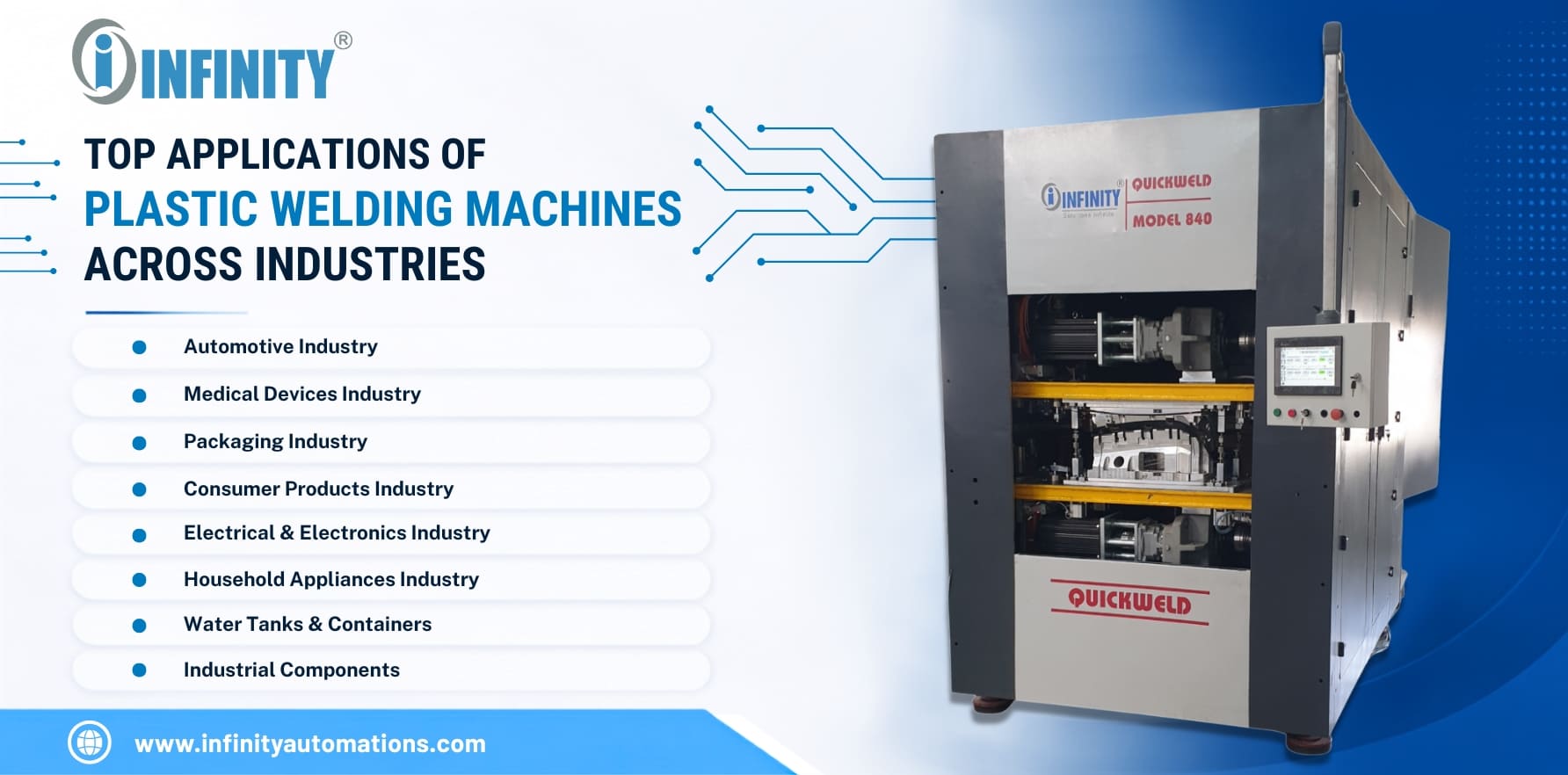
In today's manufacturing landscape, thermoplastics have become one of the most widely used materials due to their lightweight properties, durability, corrosion resistance, and design flexibility. Industries such as automotive, medical devices, packaging, electrical & electronics, consumer products, and industrial manufacturing increasingly rely on plastic components to improve product performance while reducing production costs. As the demand for high-quality plastic products continues to grow, manufacturers require reliable joining technologies that ensure precision, strength, and long-term performance.
Traditional joining methods such as adhesives, screws, rivets, and mechanical fasteners often present challenges, including longer assembly times, additional material costs, inconsistent joint quality, and maintenance requirements. In contrast, a Plastic Welding Machine creates strong, permanent, and leak-proof joints by directly fusing compatible thermoplastic materials. This process not only improves product durability but also supports faster production cycles, consistent weld quality, and seamless integration into automated manufacturing lines.
Today, Plastic Welding Machines play a vital role in producing components that demand high precision, structural integrity, and repeatable performance. From automotive fluid reservoirs and medical devices to electrical enclosures, packaging containers, household appliances, water tanks, and industrial components, plastic welding technology has become an essential part of modern manufacturing. Different welding techniques—including Hot Plate Welding, Spin Welding, and Ultrasonic Welding—are selected based on product design, material type, production volume, and application requirements.
This blog explores the top applications of Plastic Welding Machines across industries, highlighting how different sectors benefit from advanced plastic welding technology. Whether you're a manufacturer, production engineer, quality professional, or business owner, understanding these applications will help you choose the right welding solution for your manufacturing process.
With nearly two decades of experience, Infinity Automation Systems Private Limited, established in 2006 in Pune, Maharashtra, provides customized Plastic Welding Machines and industrial automation solutions designed to meet diverse manufacturing requirements. Our expertise in Hot Plate Welding, Spin Welding, and Ultrasonic Welding enables manufacturers across multiple industries to achieve precise, reliable, and efficient plastic component welding while improving overall production quality and productivity.
What is a Plastic Welding Machine?

A Plastic Welding Machine is an advanced industrial manufacturing system used to permanently join two or more thermoplastic components by applying controlled heat, pressure, and, in some processes, motion. Unlike adhesives, screws, or mechanical fasteners, plastic welding fuses compatible plastic materials at the molecular level, creating strong, durable, and leak-proof joints without introducing additional joining materials.
Plastic welding has become an essential manufacturing process across industries where precision, strength, and product reliability are critical. Modern Plastic Welding Machines are widely used in the automotive, medical, electrical & electronics, packaging, household appliance, and industrial manufacturing sectors to produce high-quality plastic components with consistent weld integrity.
At Infinity Automation Systems, our customized Plastic Welding Machines are designed to deliver high precision, repeatability, and seamless integration into automated production lines, helping manufacturers improve productivity while maintaining stringent quality standards.
How Does a Plastic Welding Machine Work?
Although different welding technologies use different methods, the basic working principle remains the same.
- Component Positioning – The plastic components are accurately positioned and securely clamped within the welding fixture to ensure proper alignment.
- Heat Generation – The machine applies heat using the selected welding technology to soften the mating surfaces of the thermoplastic parts.
- Controlled Pressure – Once the material reaches the required temperature, controlled pressure is applied to fuse the components together.
- Cooling & Solidification – The welded joint is allowed to cool under controlled pressure, forming a strong, permanent, and leak-proof bond.
- Inspection & Quality Verification – The finished component is inspected to ensure weld consistency, dimensional accuracy, and product quality before moving to the next production stage.
This controlled process ensures repeatable welding results while minimizing production defects and material wastage.
Types of Plastic Welding Machines
Different applications require different welding technologies depending on the plastic material, product design, production volume, and quality requirements. The most commonly used plastic welding methods include:
1. Hot Plate Welding
Hot Plate Welding is one of the most reliable methods for joining large and complex thermoplastic components. In this process, a heated metal plate raises the temperature of the mating surfaces until they become soft. The heated plate is then removed, and the components are pressed together under controlled pressure to create a strong, uniform weld.
Best Applications: Automotive fluid reservoirs, water tanks, battery housings, air ducts, large industrial plastic components, leak-proof containers.
Key Advantages: Excellent weld strength, ideal for large plastic parts, suitable for airtight and watertight applications, high process repeatability, perfect for automated manufacturing.
2. Spin Welding
Spin Welding joins circular thermoplastic components using rotational friction. One component rotates at high speed while the other remains stationary. The friction generated between the surfaces produces heat, softening the plastic and creating a strong molecular bond when rotation stops and pressure is maintained.
Best Applications: Automotive filters, fluid reservoirs, plastic caps, cylindrical containers, pump housings.
Key Advantages: Very fast welding cycle, strong circular welds, high production efficiency, excellent repeatability, suitable for high-volume manufacturing.
3. Ultrasonic Welding
Ultrasonic Welding uses high-frequency ultrasonic vibrations to generate localized heat at the joint interface. The thermoplastic materials melt rapidly under pressure, creating a precise weld without external heating elements or adhesives.
Best Applications: Medical devices, electrical connectors, electronic housings, sensors, consumer products, small precision plastic components.
Key Advantages: Extremely fast process, high precision, clean and flash-free welding, energy-efficient operation, ideal for delicate plastic components.
Choosing the Right Plastic Welding Technology
Selecting the appropriate Plastic Welding Machine depends on several factors, including material compatibility, product geometry, weld strength requirements, production volume, cycle time, and automation needs. Manufacturers often choose Hot Plate Welding for large, leak-proof components, Spin Welding for circular parts requiring high-speed production, and Ultrasonic Welding for small, precision-engineered plastic assemblies.
At Infinity Automation Systems, we provide customized Plastic Welding Machines tailored to your manufacturing process. Our solutions include Hot Plate Welding, Spin Welding, and Ultrasonic Welding technologies, enabling manufacturers to achieve reliable, repeatable, and high-quality plastic component welding across a wide range of industrial applications.
Why Plastic Welding Machines are Preferred in Modern Manufacturing
As manufacturing technologies continue to evolve, industries are increasingly adopting advanced production methods that improve efficiency, product quality, and cost-effectiveness. One such technology is the Plastic Welding Machine, which has become an essential part of modern manufacturing across sectors including automotive, medical devices, electrical & electronics, packaging, consumer products, and industrial equipment.
Unlike conventional joining methods such as adhesives, screws, rivets, or mechanical fasteners, Plastic Welding Machines create permanent molecular bonds between thermoplastic components. This results in stronger, cleaner, and more reliable joints while supporting high-speed automated production. Whether manufacturing leak-proof containers, automotive components, or precision medical devices, plastic welding offers numerous advantages that make it the preferred joining technology.
Creates molecular-level bonds that are often as strong as—or even stronger than—the base material, with excellent resistance to vibration and impact.
Provides highly reliable, leak-proof welds that eliminate gaps between joined components for airtight or watertight applications.
Offers fast and repeatable welding cycles, allowing businesses to manufacture large quantities of components efficiently.
Designed to integrate seamlessly into automated assembly lines, robotic workstations, and intelligent manufacturing systems.
Reduces material costs and assembly time by eliminating the need for adhesives, solvents, screws, rivets, or sealing compounds.
Supports sustainable production by eliminating chemical adhesives, reducing material waste, and improving energy efficiency.
Uses precisely controlled welding parameters to ensure every weld meets the required quality standards with minimal variation.
Why Manufacturers Trust Plastic Welding Machines
As industries continue to embrace automation and precision manufacturing, Plastic Welding Machines have become the preferred solution for joining thermoplastic components. Their ability to produce strong, leak-proof joints, support high-speed automated production, reduce manufacturing costs, improve sustainability, and deliver consistent product quality makes them an indispensable technology across modern manufacturing environments.
At Infinity Automation Systems Private Limited, we design and manufacture customized Plastic Welding Machines, including Hot Plate Welding, Spin Welding, and Ultrasonic Welding solutions, tailored to meet the specific requirements of diverse industries. Our advanced automation expertise helps manufacturers improve productivity, enhance product quality, and achieve reliable, repeatable welding performance.
Applications of Plastic Welding Machines Across Industries
As industries continue to adopt lightweight, durable, and high-performance thermoplastic materials, the demand for advanced Plastic Welding Machines has increased significantly. These machines have become an integral part of modern manufacturing by providing strong, leak-proof, and permanent joints for a wide variety of plastic components. From automotive systems and life-saving medical devices to consumer products and industrial equipment, plastic welding technology ensures consistent quality, faster production, and long-lasting product performance.
Different industries have unique manufacturing requirements, which is why various welding technologies—including Hot Plate Welding, Spin Welding, and Ultrasonic Welding—are selected based on component design, material compatibility, production volume, and quality standards. The ability to integrate Plastic Welding Machines into automated production lines further enhances manufacturing efficiency while reducing operational costs.
1. Automotive Industry
Automotive Plastic Welding is widely used for manufacturing leak-proof and durable plastic components such as fuel tanks, coolant reservoirs, washer fluid tanks, air intake manifolds, headlamp housings, battery cases, and interior trim parts. Plastic Welding Machines help automotive manufacturers reduce vehicle weight while ensuring high structural strength and long-term reliability.
Leak-proof High strength Automated2. Medical Devices Industry
The medical industry relies on Medical Plastic Welding to manufacture sterile and precision-engineered products, including IV fluid containers, medical filters, diagnostic cartridges, surgical instruments, drug delivery systems, and laboratory equipment. Plastic welding provides contamination-free, airtight joints that meet strict healthcare quality standards.
Sterile Precision Contamination-free3. Packaging Industry
Plastic Welding Machines are extensively used in the packaging sector for producing airtight and leak-proof plastic containers, food packaging, cosmetic packaging, pharmaceutical containers, and chemical storage bottles. The technology ensures secure sealing, improves product safety, and supports high-speed manufacturing.
Airtight High-speed Cost-effective4. Consumer Products Industry
Many everyday consumer products require durable plastic joints for improved performance and aesthetics. Plastic Welding Machines are used to manufacture storage containers, plastic furniture, kitchenware, toys, luggage, sports equipment, and personal care products while maintaining high production efficiency and consistent quality.
Durable Aesthetic High-volume5. Electrical & Electronics Industry
The electrical and electronics sector uses Plastic Component Welding for manufacturing switch housings, electrical enclosures, battery cases, connectors, sensors, smart devices, and electronic control units. Plastic welding provides precise, reliable, and insulated joints essential for electronic product safety and performance.
Precise Insulated Reliable6. Household Appliances Industry
Modern household appliances incorporate numerous welded plastic components to improve durability and reduce assembly complexity. Applications include washing machines, vacuum cleaners, refrigerators, water purifiers, air coolers, coffee machines, and kitchen appliances where precision plastic welding ensures long-lasting product performance.
Durable Low maintenance Efficient7. Water Tanks & Containers
Large thermoplastic products such as water storage tanks, chemical tanks, industrial containers, and agricultural reservoirs require strong, watertight joints. Hot Plate Welding is commonly used to create durable, leak-proof welds capable of withstanding demanding environmental and industrial conditions.
Waterproof Corrosion-resistant Long service life8. Industrial Components
Industrial manufacturing uses Industrial Plastic Welding for producing machine guards, fluid reservoirs, pipes, ducts, filter housings, automation equipment, and custom-engineered plastic assemblies. Plastic Welding Machines help manufacturers achieve high precision, repeatable weld quality, and seamless integration with automated production systems.
Heavy-duty Automation-ready High productivityIndustries Covered
1. Automotive Industry
The automotive industry is one of the largest users of Plastic Welding Machines due to the growing demand for lightweight, durable, and fuel-efficient vehicles. Plastic welding is widely used for manufacturing air intake manifolds, coolant tanks, washer reservoirs, fuel tanks, headlamp housings, interior trims, and sensor housings. These components require strong, leak-proof joints that can withstand vibration, pressure, and changing temperatures.
Modern Automotive Plastic Welding technologies, such as Hot Plate Welding and Spin Welding, ensure consistent weld quality while supporting automated production lines. This enables manufacturers to improve productivity without compromising product reliability.
Benefits: Leak-proof and durable joints, reduced vehicle weight, faster assembly process, improved product durability, high production efficiency.
2. Medical Devices Industry
Precision and hygiene are essential in the medical sector, making Medical Plastic Welding a preferred manufacturing process. Plastic Welding Machines are used to produce IV containers, medical filters, diagnostic devices, medical cartridges, surgical equipment, and drug delivery systems. The welding process creates strong, contamination-free joints without the need for adhesives or additional sealing materials.
Advanced welding technologies ensure high repeatability and consistent product quality while meeting stringent healthcare manufacturing standards.
Benefits: Sterile and contamination-free joints, high welding precision, excellent repeatability, reliable product performance, supports medical quality standards.
3. Packaging Industry
The packaging industry relies on Plastic Welding Machines to manufacture durable and leak-proof packaging solutions. Common applications include plastic containers, bottle caps, cosmetic packaging, food packaging, and chemical containers. Plastic welding provides airtight sealing that helps preserve product quality while reducing the risk of leakage.
Automated welding systems also improve production speed, making them ideal for high-volume manufacturing environments.
Benefits: Airtight and leak-proof sealing, faster production cycles, reduced material wastage, improved packaging quality, cost-effective manufacturing.
4. Consumer Products Industry
Many everyday consumer products require reliable plastic joining for strength and durability. Plastic Welding Machines are widely used to manufacture toys, plastic furniture, bottles, storage boxes, and kitchenware. The process creates clean and aesthetically pleasing joints while supporting large-scale production.
Manufacturers benefit from improved product consistency and reduced assembly time.
Benefits: Better product appearance, strong and durable joints, high-volume production, consistent product quality, reduced manufacturing costs.
5. Electrical & Electronics Industry
The electrical and electronics industry uses Plastic Component Welding to manufacture electrical housings, switches, battery cases, connectors, and sensor housings. Plastic welding provides accurate assembly while maintaining insulation and product safety.
Technologies such as Ultrasonic Welding are especially suitable for precision electronic components requiring clean and reliable welds.
Benefits: Excellent electrical insulation, precision component assembly, improved product safety, high repeatability, reliable long-term performance.
6. Household Appliances
Modern household appliances contain numerous plastic components that require durable and accurate joining. Plastic Welding Machines are commonly used in the production of washing machines, vacuum cleaners, water purifiers, air coolers, and refrigerators. Plastic welding improves assembly quality while increasing manufacturing efficiency.
The result is durable appliances with reduced maintenance requirements and longer service life.
Benefits: Durable product assembly, leak prevention, low maintenance, improved manufacturing efficiency, long-lasting performance.
7. Water Tanks & Containers
Large plastic products such as water tanks, chemical storage tanks, and agricultural containers require strong, waterproof joints to prevent leakage. Hot Plate Welding Machines are widely used for these applications because they produce durable and uniform welds capable of handling demanding environmental conditions.
This process improves the overall strength and lifespan of storage systems.
Benefits: Waterproof and leak-proof joints, long service life, corrosion resistance, high structural strength, reliable performance.
8. Industrial Components
Industrial manufacturing uses Industrial Plastic Welding for producing industrial ducts, fluid reservoirs, plastic pipes, automation components, and machine guards. These components require precise and repeatable welding to ensure consistent quality in demanding production environments.
Plastic Welding Machines can be easily integrated into automated manufacturing lines, helping industries improve productivity and product reliability.
Benefits: Heavy-duty performance, automation-ready production, high productivity, consistent weld quality, reduced manufacturing downtime.
Choosing the Right Plastic Welding Machine
Selecting the right Plastic Welding Machine is essential for achieving strong welds, consistent product quality, and efficient production. The ideal solution depends on your application, production requirements, and the type of plastic components being manufactured. Evaluating the following factors can help manufacturers choose the most suitable welding technology.
- Material Compatibility – Different thermoplastics have unique melting characteristics and require specific welding methods. Ensure the selected Plastic Welding Machine is compatible with the material being processed, such as PP, PE, ABS, PVC, PA, or PC, to achieve reliable and durable welds.
- Production Volume – Production capacity plays a key role in machine selection. High-volume manufacturing typically benefits from automated welding systems with faster cycle times, while low-volume or customized production may require flexible semi-automatic solutions.
- Welding Technology – Choose the welding process based on the product design and application: Hot Plate Welding for large, leak-proof plastic components; Spin Welding for circular or rotationally symmetrical parts; and Ultrasonic Welding for small, precision plastic components with short cycle times.
- Automation Requirements – For manufacturers using automated production lines, selecting a Plastic Welding Machine that integrates with robotics, PLCs, conveyors, and Industry 4.0 systems can improve productivity, reduce manual intervention, and ensure consistent weld quality.
- Product Design – The size, shape, wall thickness, and joint configuration of the plastic component influence the choice of welding technology. Complex or custom-designed parts may require specialized fixtures and customized welding solutions.
- Quality Standards – Industries such as automotive, medical devices, electrical & electronics, and packaging require strict quality control. A Plastic Welding Machine should provide repeatable welding parameters, accurate process control, and reliable performance to meet industry standards and customer expectations.
Why Choose Infinity Automation Systems for Plastic Welding Solutions?
Choosing the right manufacturing partner is just as important as selecting the right welding technology. Infinity Automation Systems Private Limited, established in 2006 in Pune, Maharashtra, has built a strong reputation for delivering innovative and customized industrial automation solutions to manufacturers across diverse industries.
We specialize in designing and manufacturing Plastic Welding Machines tailored to specific production requirements. Our expertise includes Hot Plate Welding, Spin Welding, and Ultrasonic Welding, enabling manufacturers to achieve precise, durable, and repeatable plastic component welding. Whether you require standalone welding equipment or fully automated production systems, our solutions are engineered to improve productivity, quality, and operational efficiency.
Beyond plastic welding, our capabilities extend to Leak Testing Systems, Turnkey Assembly Automation, and Vision Inspection Systems, providing comprehensive automation solutions from a single source. Every machine is developed with a focus on precision engineering, reliable performance, and seamless integration into modern manufacturing environments. Our dedicated after-sales support team ensures smooth installation, operator training, maintenance assistance, and long-term technical support to maximize equipment performance.
Whether you operate in the automotive, medical devices, packaging, electrical & electronics, consumer products, or industrial manufacturing sector, Infinity Automation Systems is committed to delivering customized solutions that help your business enhance product quality, reduce production costs, and achieve greater manufacturing efficiency.
Address: S No. 80/2A, Mumbai Bangalore Bypass Highway, Near JSPM Engineering College, Ashok Nagar, Tathawade, Pune – 411033, Maharashtra, India
Phone: +91 93256 40283 / +91 93256 40285 / +91 93256 40287
Email: sales@infinityautomations.com
Website: https://www.infinityautomations.com
Ready to Upgrade Your Plastic Welding Process?
Looking for a customized Plastic Welding Machine or a complete industrial automation solution? Contact Infinity Automation Systems today to discuss your application requirements. Our engineering team will help you select the right welding technology and automation solution to improve productivity, ensure consistent quality, and support your long-term manufacturing goals.
Contact Infinity Automation →Conclusion
Plastic Welding Machines have become an essential technology in modern manufacturing, enabling industries to produce strong, durable, and leak-proof plastic components with greater efficiency. From automotive and medical devices to packaging, electronics, and industrial applications, plastic welding offers reliable, cost-effective, and high-quality joining solutions.
As manufacturing continues to evolve with automation and Industry 4.0, advanced plastic welding technologies will play an even greater role in improving productivity, quality, and process consistency. At Infinity Automation Systems Private Limited, we provide customized Plastic Welding Machines and industrial automation solutions that help manufacturers meet today's production demands while preparing for the future.
Frequently Asked Questions (FAQs)
A Plastic Welding Machine is an industrial machine used to join thermoplastic components by applying controlled heat, pressure, or friction. It creates strong, permanent, and leak-proof joints without using adhesives or mechanical fasteners. Plastic Welding Machines are widely used in automotive, medical, packaging, electrical, and industrial manufacturing applications.
Plastic Welding Machines are used across various industries, including automotive, medical devices, packaging, electrical & electronics, consumer products, household appliances, water tanks, and industrial manufacturing. They help produce durable, high-quality plastic components with consistent welding performance.
Yes. In most industrial applications, plastic welding provides stronger and more durable joints than adhesives because it fuses compatible plastic materials at the molecular level. This results in improved structural strength, leak-proof sealing, and long-term reliability.
Most thermoplastics can be welded using suitable welding technologies. Common materials include Polypropylene (PP), Polyethylene (PE), ABS, PVC, Polycarbonate (PC), Nylon (PA), and Acrylic (PMMA). The appropriate welding method depends on the material properties and application requirements.
The best welding method depends on the product design and manufacturing requirements. Hot Plate Welding is ideal for large leak-proof components, Spin Welding is suitable for circular plastic parts, and Ultrasonic Welding is preferred for small, precision plastic components requiring fast production cycles.
Hot Plate Welding is a plastic joining process in which a heated plate melts the surfaces of two thermoplastic components. The heated plate is removed, and the components are pressed together to create a strong, durable, and leak-proof weld. It is commonly used for automotive tanks, industrial containers, and large plastic assemblies.
Spin Welding is a friction-based plastic welding process used for circular or rotationally symmetrical components. One plastic part rotates at high speed while the other remains stationary, generating heat through friction. The parts are then pressed together to form a strong and reliable weld.
Choosing the right Plastic Welding Machine depends on factors such as plastic material, component design, production volume, welding technology, automation requirements, and quality standards. Selecting the appropriate machine ensures reliable weld quality, improved productivity, and cost-effective manufacturing. Consulting an experienced manufacturer like Infinity Automation Systems can help identify the best solution for your specific application.