Plastic Welding Machine for Automotive Industry: Complete Guide to Precision Plastic Welding Solutions
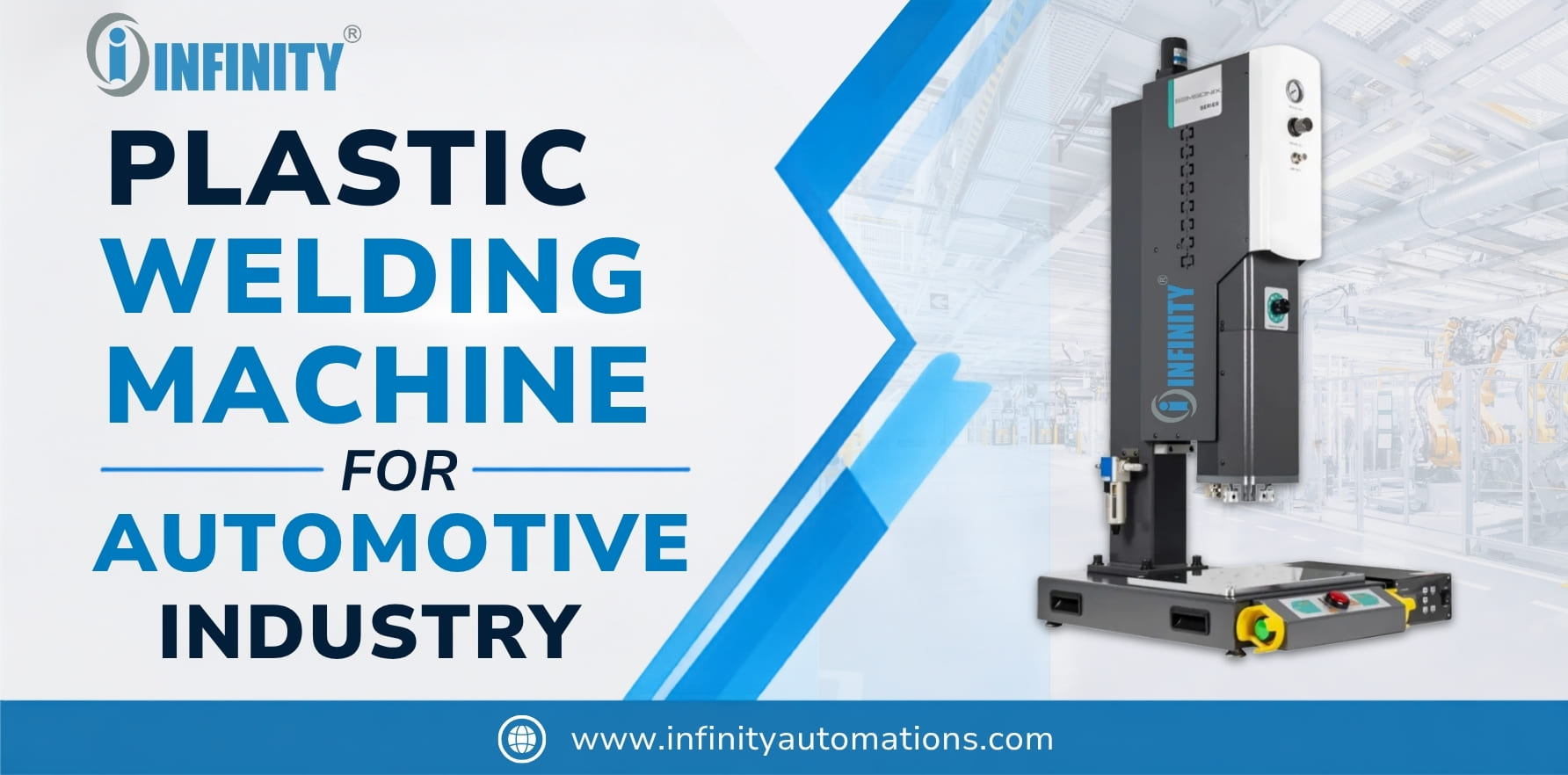
A Plastic Welding Machine for the Automotive Industry is an automated industrial system used to permanently join thermoplastic components using controlled heat, pressure, vibration, friction or laser energy. Depending on the component material, geometry, size and production requirements, manufacturers can use Hot Plate, Ultrasonic, Vibration, Spin, Infrared or Laser Plastic Welding.
The automotive industry has undergone a significant transformation over the past two decades. Manufacturers are increasingly replacing traditional metal components with high-performance engineering plastics to reduce vehicle weight, improve fuel efficiency, lower emissions, and support electric vehicle (EV) development.
Modern passenger vehicles contain hundreds of plastic components, many of which require permanent, leak-proof, and high-strength joints. These include fuel tanks, air intake manifolds, coolant reservoirs, battery housings, HVAC components, washer tanks, filters, lighting assemblies, and numerous interior parts.
To achieve reliable and repeatable joints, automotive manufacturers rely on advanced Plastic Welding Machines rather than adhesives, screws, or rivets. Technologies such as Hot Plate Welding, Ultrasonic Welding, Vibration Welding, Spin Welding, Infrared Welding, and Laser Plastic Welding provide strong, consistent welds suitable for demanding automotive applications.
This comprehensive guide explains how a Plastic Welding Machine for Automotive Industry improves manufacturing quality, explores different welding technologies, highlights automotive applications, discusses key benefits, and provides guidance for selecting the right welding solution.
Why Plastic Welding is Important in Automotive Manufacturing

Automotive manufacturers continuously seek ways to improve vehicle efficiency while maintaining safety, durability, and production efficiency.
Engineering plastics have become the preferred choice because they offer reduced weight, corrosion resistance, design flexibility, chemical resistance, lower manufacturing costs, better thermal insulation, and improved fuel efficiency.
However, many plastic parts require permanent assembly during manufacturing. Traditional joining methods such as screws, adhesives, and mechanical fasteners often increase assembly time, add weight, or introduce potential leak paths.
Plastic Welding creates strong, permanent joints without additional fastening materials, making it the preferred joining technology for modern automotive production.
Evolution of Automotive Plastic Components
Today's vehicles contain significantly more plastic than previous generations.
Typical plastic materials include:
- Polypropylene (PP)
- Polyamide (PA)
- ABS
- HDPE
- Polycarbonate (PC)
- PBT
- Nylon
- Glass-filled engineering plastics
These materials are widely used in interior trim, HVAC systems, fluid reservoirs, fuel systems, lighting assemblies, engine compartment components, and EV battery enclosures.
Joining these materials reliably requires specialized plastic welding equipment.
What is a Plastic Welding Machine?
A Plastic Welding Machine is an industrial system designed to permanently join thermoplastic components by applying controlled heat, pressure, vibration, friction, or laser energy.
Unlike adhesives or mechanical fastening methods, plastic welding creates a molecular bond between components, producing strong and durable joints.
Modern systems typically include:
- PLC control system
- HMI touchscreen
- Precision fixtures
- Pneumatic or servo actuators
- Temperature controllers
- Pressure monitoring
- Data logging
- Safety systems
Many machines are fully automated and integrated into high-volume automotive production lines.
Plastic Welding Technologies Used in Automotive Industry
Selecting the appropriate welding technology depends on component size, material, geometry, and production requirements.
Hot Plate Welding
A Hot Plate Welder heats both plastic surfaces using a temperature-controlled plate. After heating, the plate retracts and the components are pressed together to create a strong weld.
Advantages: Excellent weld strength, ideal for large parts, airtight and watertight joints, suitable for complex geometries, and high repeatability.
Automotive Applications: Fuel tanks, washer tanks, air ducts, coolant reservoirs, battery housings, and fluid containers.
Ultrasonic Welding
High-frequency vibrations generate frictional heat that melts the joining surfaces.
Advantages: Very fast cycle times, high precision, no consumables, and excellent automation.
Applications: Sensors, switch housings, electrical connectors, interior trim, and small automotive components.
Vibration Welding
Linear vibration creates frictional heat between two plastic components.
Advantages: Suitable for large components, strong structural welds, and excellent repeatability.
Applications: Intake manifolds, air ducts, fluid reservoirs, and engine covers.
Spin Welding
One component rotates against another to generate frictional heat.
Applications: Filters, reservoirs, caps, and cylindrical components.
Infrared Welding
Infrared heaters warm the plastic surfaces without physical contact.
Benefits: No contamination, clean welding process, and high-quality cosmetic appearance.
Applications: Visible automotive components requiring excellent aesthetics.
Laser Plastic Welding
Laser energy passes through one plastic component and melts the interface between two parts.
Advantages: Precision welding, no particulate generation, minimal thermal distortion, and excellent appearance.
Applications: Electronic housings, sensors, camera modules, and medical-grade automotive electronics.
Automotive Applications of Plastic Welding
Plastic welding is used throughout modern vehicle manufacturing.
Common applications include:
- Fuel tanks
- Washer fluid reservoirs
- Air intake manifolds
- HVAC ducts
- Coolant reservoirs
- Battery housings
- EV battery components
- Oil separators
- Lighting assemblies
- Sensor housings
- Air filter housings
- Expansion tanks
Interior Automotive Components
Vehicle interiors contain numerous welded plastic parts.
Examples include:
- Instrument panels
- Door panels
- Console assemblies
- Air vents
- Cup holders
- Storage compartments
- Dashboard components
Plastic welding provides improved appearance, reduced assembly time, better structural strength, and elimination of visible fasteners.
Under-Hood Components
The engine compartment exposes plastic parts to high temperatures, chemicals, oils, vibrations, and pressure fluctuations.
Common welded components include:
- Coolant reservoirs
- Expansion tanks
- Air intake systems
- Air ducts
- Oil separators
- Filter housings
These applications require durable, leak-free welds capable of withstanding demanding operating conditions.
Fuel Tank Manufacturing
Modern fuel tanks are commonly manufactured using high-density polyethylene (HDPE). After molding, multiple sections must be permanently joined.
A Hot Plate Welder is one of the preferred solutions because it provides high weld strength, leak-proof joints, excellent repeatability, and reliable long-term performance.
Following welding, manufacturers often perform leak testing to verify fuel tank integrity.
Air Duct Welding
Automotive air intake systems require smooth internal airflow and airtight joints.
Plastic welding offers several advantages over mechanical fastening:
- Reduced airflow restriction
- Better sealing
- Lower weight
- Improved durability
Hot Plate Welding and Vibration Welding are commonly used for these components.
Battery Housing Welding
Electric vehicle battery housings require high-strength, moisture-resistant joints.
Welding applications include:
- Battery enclosures
- Cooling channels
- Protective covers
- Module housings
Leak-free welds help achieve required ingress protection (IP) ratings while protecting sensitive electrical components.
Benefits of Plastic Welding in Automotive Manufacturing
Plastic welding creates molecular bonds rather than mechanical connections.
Eliminating screws and metal fasteners contributes to lightweight vehicle design.
Essential for fuel systems, cooling systems, battery housings, and fluid reservoirs.
Automated welding systems support high-volume manufacturing.
Reduced labor and fewer consumables improve manufacturing efficiency.
No visible screws or adhesive residues.
PLC-controlled systems ensure consistent weld quality.
Plastic welding machines integrate seamlessly with robots, conveyors, vision systems, MES software, and leak testing stations.
Choosing the Right Plastic Welding Machine
Selecting the appropriate system depends on several factors.
- Material Type: Different plastics require different welding technologies.
- Component Size: Large components generally benefit from Hot Plate or Vibration Welding.
- Production Volume: High-volume production often requires fully automated systems.
- Leak Tightness Requirements: Fuel systems and battery housings require leak-proof welds.
- Cosmetic Requirements: Visible components may benefit from Infrared or Laser Welding.
- Automation Integration: Consider compatibility with PLC systems, robots, vision inspection, leak testing, and Industry 4.0 platforms.
Case Study: Improving Automotive Reservoir Manufacturing
Customer Challenge: An automotive supplier manufacturing coolant reservoirs experienced inconsistent weld quality and high rejection rates due to manual assembly processes.
Solution: The manufacturer implemented an automated Hot Plate Welding Machine featuring servo-controlled positioning, PLC-based process control, precision temperature management, automatic loading fixture, integrated leak testing, and digital production reports.
Results: Improved weld consistency, reduced production defects, lower material wastage, faster production cycles, higher leak-test pass rates, improved traceability, and increased customer satisfaction.
Why Choose Infinity Automation Systems for Plastic Welding Machines?
Infinity Automation Systems specializes in developing advanced Plastic Welding Machines for automotive, industrial, and EV manufacturing applications.
Our solutions include:
- Hot Plate Welding Machines
- Ultrasonic Welding Systems
- Vibration Welding Machines
- Spin Welding Machines
- Leak Testing Integration
- PLC & HMI Automation
- Servo-Controlled Welding Systems
- Robotic Automation
- Industry 4.0 Ready Solutions
- Custom Fixtures & Tooling
Every machine is designed to deliver high weld quality, repeatability, productivity, and seamless integration with modern manufacturing lines.
Get the Right Plastic Welding Machine for Your Production Line
Need a Plastic Welding Machine or Hot Plate Welder for automotive components, EV battery housings, reservoirs, air ducts or other thermoplastic parts? Infinity Automation Systems designs customized welding solutions based on component geometry, material, production volume, cycle time and automation requirements.
Discuss Your Requirement → Explore Plastic Welding Solutions →Conclusion
The increasing use of engineering plastics in modern vehicles has made the Plastic Welding Machine for Automotive Industry an indispensable part of automotive manufacturing. From fuel tanks and air intake systems to coolant reservoirs, battery housings, lighting assemblies, and interior trim, Automotive Plastic Welding enables manufacturers to produce lightweight, durable, and high-performance components with exceptional consistency.
Technologies such as Hot Plate Welder, Ultrasonic Welding, Vibration Welding, Spin Welding, Infrared Welding, and Laser Welding each offer unique advantages based on the application, material, and production requirements. Among these, Hot Plate Welding remains one of the most widely adopted solutions for large, leak-tight automotive components due to its excellent weld strength and repeatability.
By integrating advanced Plastic Welding Machines with robotic automation, PLC controls, leak testing, and Industry 4.0 technologies, manufacturers can improve product quality, reduce production costs, increase throughput, and meet the demanding standards of today's automotive and electric vehicle industries.
Choosing the right welding technology not only ensures reliable component performance but also strengthens manufacturing efficiency, regulatory compliance, and long-term competitiveness in an increasingly advanced automotive market.
Contact Infinity Automation Systems to discuss your automotive plastic welding requirements.
Frequently Asked Questions (FAQs)
Plastic welding creates strong, permanent, leak-free joints that improve product quality, reduce weight, and increase manufacturing efficiency.
Hot Plate Welding is widely used for fuel tanks because it provides excellent weld strength and airtight sealing for large plastic components.
Fuel tanks, air ducts, battery housings, coolant reservoirs, washer tanks, intake manifolds, HVAC systems, lighting assemblies, and interior trim are commonly welded.
Yes. Modern systems can integrate with PLCs, robots, conveyors, leak testing machines, vision inspection systems, and MES software.
Plastic welding creates durable, moisture-resistant, and leak-proof joints that help protect battery components from water, dust, and environmental contamination.
A Plastic Welding Machine permanently joins thermoplastic components using controlled heat, pressure, vibration, friction, or laser energy.
A Hot Plate Welder uses a heated plate to melt thermoplastic surfaces before pressing them together to create strong, permanent joints.
Plastic Welding Machines are used in automotive, medical, electronics, packaging, consumer goods, and industrial manufacturing.
Common materials include PP, PE, HDPE, ABS, Nylon, PVC, PC, PBT, TPO, and other thermoplastics.
Hot plate welding creates a molecular bond that is often stronger than adhesives and provides better durability in demanding automotive applications.
Servo-controlled systems offer precise positioning, consistent force, faster cycle times, and improved energy efficiency.
Yes. Properly designed plastic welding processes produce strong, leak-proof joints suitable for fluid and fuel systems.
Yes. Plastic welding machines can be customized with specific tooling, fixtures, automation, and control systems.
Cycle times vary depending on component size, material, and technology. Ultrasonic welding can be completed in seconds, while Hot Plate Welding may take longer for large components.
Yes. Many systems are fully automated and integrate with production lines, robots, and quality control systems.
There is no single welding method that is best for every automotive component. The appropriate technology depends on material, component size, geometry, joint design, required strength, leak-tightness, cosmetic requirements, and production volume.
Yes. Plastic welding can be used for EV battery-related components such as battery housings, cooling channels, protective covers, and module housings where durable, moisture-resistant and leak-tight joints are required.
Hot Plate Welding uses a heated platen to soften mating plastic surfaces before joining them, while Ultrasonic Welding uses high-frequency vibrations to generate frictional heat at the joining interface.
Plastic welding can eliminate screws, rivets and other mechanical fastening hardware, supporting lightweight component design while creating permanent joints.
Yes. Plastic welding systems can be integrated with leak-testing stations. Automated welding systems can combine welding and leak testing as part of a production line.