Batch Weighing System for Chemical Industry: Complete Guide to Accurate & Automated Chemical Batching
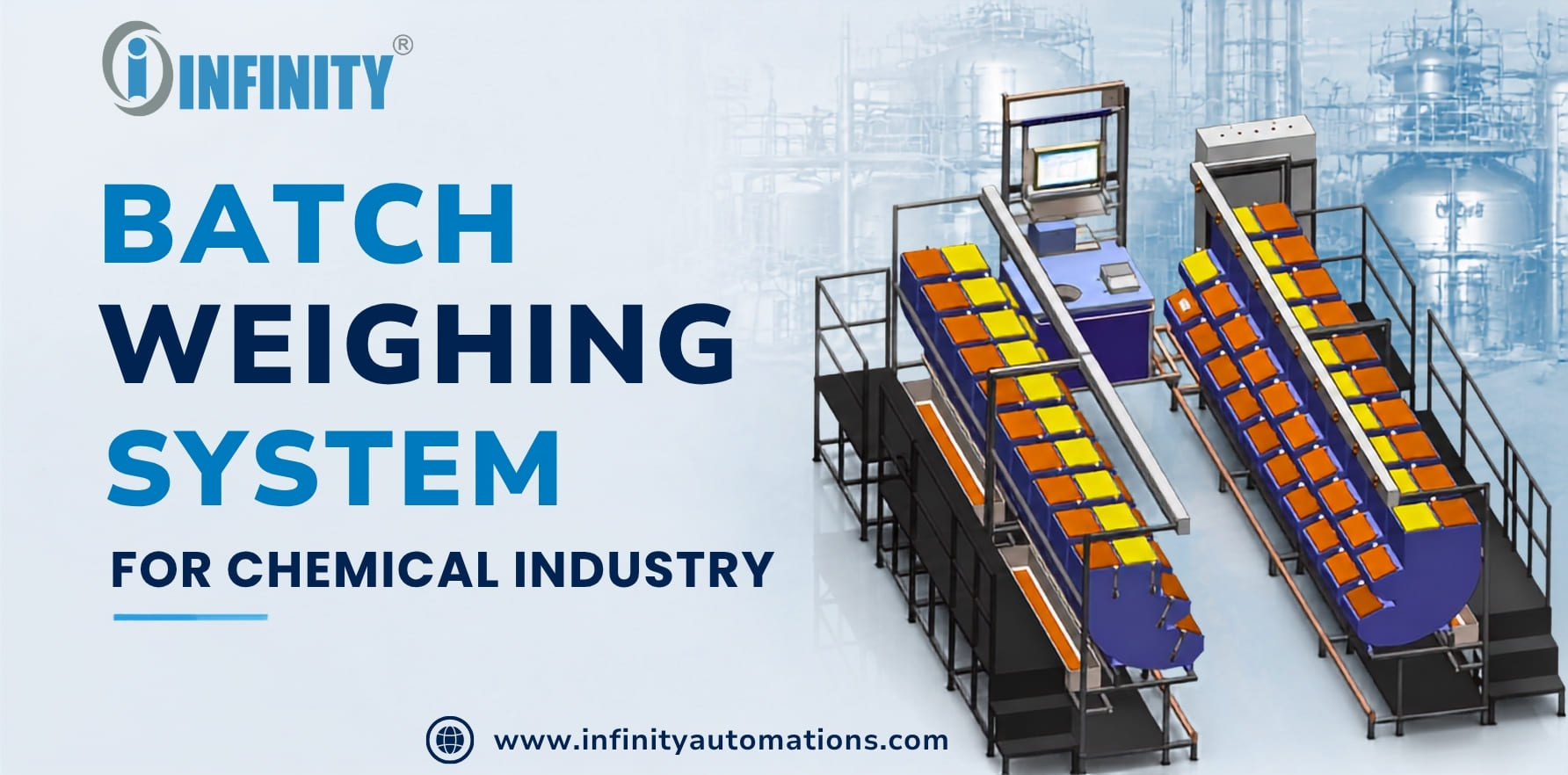
A Batch Weighing System for the Chemical Industry is an automated solution that accurately weighs, doses, batches and transfers multiple raw materials according to predefined recipes. It typically combines precision load cells, weighing hoppers, feeders, PLC controls, HMI, recipe management and material transfer systems to improve batch consistency, traceability, safety and production efficiency.
The chemical manufacturing industry relies on precise ingredient measurement to produce safe, consistent, and high-quality products. Whether manufacturing specialty chemicals, paints, coatings, adhesives, polymers, fertilizers, detergents, resins, or industrial compounds, even the smallest variation in raw material proportions can significantly affect product quality, production efficiency, and regulatory compliance.
Traditionally, many chemical plants depended on manual weighing processes that were labor-intensive and prone to human error. As production demands increase and quality standards become more stringent, manufacturers are rapidly adopting automated Batch Weighing Systems for the Chemical Industry to improve accuracy, reduce material wastage, and streamline operations.
A modern Batch Weighing System automates the weighing, dosing, batching, and transfer of raw materials using precision load cells, PLC-based controls, recipe management software, and integrated material handling systems. These solutions ensure every batch is produced according to predefined formulations while improving traceability and minimizing operator intervention.
This comprehensive guide explains how a Batch Weighing System for Chemical Industry works, explores its key components, discusses automation and safety features, highlights industry benefits, and provides guidance for selecting the right solution for your manufacturing facility.
Why Accurate Chemical Batch Weighing Matters
Chemical manufacturing is based on carefully controlled formulations. Every ingredient contributes to the final product's physical, chemical, and performance characteristics.
Incorrect weighing can result in:
- Product quality variation
- Failed batches
- Increased raw material consumption
- Production downtime
- Safety hazards
- Customer complaints
- Regulatory non-compliance
- Higher operating costs
Accurate Ingredient Weighing ensures every production batch meets the required specifications while maximizing efficiency and profitability.
What is a Batch Weighing System?
A Batch Weighing System is an automated industrial solution that measures, dispenses, and transfers multiple raw materials according to predefined recipes.
The system combines:
- Precision load cells
- Weighing hoppers
- Feeders
- PLC controllers
- Human Machine Interface (HMI)
- Material transfer systems
- Recipe management software
- Data logging and reporting
These components work together to deliver consistent and repeatable Chemical Batch Weighing for a wide range of manufacturing applications.
Understanding the Chemical Batching Process
The chemical batching process involves combining multiple raw materials in precise quantities to create a finished formulation.
A typical automated process includes:
Step 1: Recipe Selection
The operator selects the required formulation from the HMI or Manufacturing Execution System (MES).
Step 2: Material Identification
The system identifies the required raw materials stored in silos, tanks, hoppers, or bins.
Step 3: Automatic Ingredient Weighing
Each ingredient is dispensed into a weighing hopper using feeders or dosing valves while load cells continuously monitor weight.
Step 4: Batch Verification
The PLC verifies that every ingredient is within the specified tolerance before the batch is approved.
Step 5: Material Transfer
The completed batch is transferred automatically to the mixer, reactor, blender, or downstream process.
Step 6: Production Recording
Batch details are automatically stored for traceability, quality assurance, and regulatory documentation.
Common Ingredients Used in Chemical Manufacturing
The type of ingredients varies depending on the product being manufactured.
Powders
Pigments, fillers, additives, catalysts, resins, and mineral powders.
Granules
Polymer pellets, plastic additives, and specialty chemicals.
Liquids
Solvents, water, acids, alkalis, oils, and plasticizers.
Micro Ingredients
Colorants, stabilizers, preservatives, and performance additives.
Each ingredient may require a different feeding and weighing mechanism based on its physical properties.
Components of a Batch Weighing System
A modern Batch Weighing System for Chemical Industry includes several integrated components.
Bulk materials are stored in silos, tanks, bins, or hoppers depending on their physical characteristics.
Materials are conveyed using screw feeders, belt feeders, vibratory feeders, pneumatic conveying systems, gravity feed systems, or liquid dosing pumps.
The weighing hopper collects ingredients while precision load cells monitor weight.
High-accuracy load cells provide reliable measurement of ingredient quantities and ensure repeatable batching.
The PLC automates the entire batching sequence, controlling feeders, valves, conveyors, alarms, and safety interlocks.
Operators use the HMI to select recipes, monitor production, view alarms, generate reports, and review batch history.
Finished batches are transferred to mixers or reactors using conveyors, pneumatic systems, or pumps.
Automation in Chemical Batch Weighing
Modern Chemical Automation significantly improves manufacturing efficiency.
Automation functions include:
- Automatic ingredient dosing
- Sequential batching
- Automatic discharge
- Batch verification
- Alarm handling
- Material tracking
- Production reporting
- Data logging
- Remote monitoring
Automation reduces manual intervention while improving consistency and productivity.
PLC-Based Process Control
A PLC-based Batch Weighing System serves as the brain of the entire process.
Key functions include:
- Ingredient sequencing
- Weight monitoring
- Feeder control
- Valve operation
- Batch completion
- Safety interlocks
- Alarm management
- Recipe execution
- Communication with SCADA and MES systems
PLC control ensures every batch follows the exact same process, improving repeatability and reducing operator dependency.
Recipe Management
Recipe management is one of the most valuable features of an automated batching system.
A recipe management system allows manufacturers to:
- Store hundreds of formulations
- Control ingredient quantities
- Manage production revisions
- Prevent unauthorized changes
- Maintain version history
- Support product traceability
Digital recipe management minimizes formulation errors and simplifies production changeovers.
Safety Considerations in Chemical Weighing
Chemical manufacturing often involves hazardous, corrosive, flammable, or toxic materials.
A properly designed Batch Weighing System should incorporate:
Dust Control
Enclosed transfer systems and dust collection equipment reduce airborne particulates and improve workplace safety.
Spill Prevention
Automated valves and controlled dosing help minimize material loss and environmental contamination.
Explosion Protection
For combustible powders or volatile chemicals, systems may require ATEX or equivalent explosion protection measures, depending on regional regulations and application requirements.
Interlocks
PLC-based safety interlocks prevent incorrect sequencing and unauthorized operation.
Emergency Shutdown
Emergency stop systems protect personnel and equipment during abnormal operating conditions.
Safety Note: Chemical batch weighing systems should be designed according to the properties of the materials being handled, the plant environment and applicable safety requirements. Explosion protection, containment, dust control and other safety measures should be evaluated by qualified engineering and safety professionals for the specific application.
Benefits of a Batch Weighing System for Chemical Industry
Precision load cells reduce weighing errors and improve formulation consistency.
Consistent ingredient ratios produce uniform chemical products.
Accurate dosing minimizes expensive raw material losses.
Automated weighing shortens batch preparation time and increases throughput.
Automation reduces dependence on manual weighing operations.
Every batch is automatically recorded for audits, quality investigations, and customer documentation.
Automated material handling reduces operator exposure to hazardous chemicals.
Modern systems integrate seamlessly with PLCs, SCADA, MES, ERP software, and automated material handling equipment.
Industry Applications
A Batch Weighing System for Chemical Industry is widely used in:
Paint & Coatings Manufacturing
Accurate dosing of pigments, binders, fillers, and additives.
Adhesives & Sealants
Ensures consistent formulation of resins, solvents, and curing agents.
Polymer Manufacturing
Automates the weighing of polymer additives, fillers, and masterbatch materials.
Fertilizer Production
Controls precise nutrient blending for consistent product quality.
Detergents & Cleaning Products
Automates batching of surfactants, fragrances, builders, and additives.
Specialty Chemicals
Supports high-precision formulation of fine chemicals and performance additives.
Rubber & Plastics
Integrates with compounding and mixing systems for consistent production.
How to Select the Right Batch Weighing System
Before investing in a weighing solution, evaluate the following factors:
- Production Capacity: Determine current and future batch size requirements.
- Number of Ingredients: Ensure the system can accommodate all required materials and future product expansion.
- Material Characteristics: Select appropriate feeders and transfer systems for powders, liquids, or granules.
- Required Accuracy: Choose high-quality load cells capable of meeting process tolerances.
- Automation Level: Evaluate the need for recipe management, reporting, robotics, and digital integration.
- Regulatory Compliance: Consider industry standards, safety requirements, and documentation needs.
Case Study: Improving Chemical Manufacturing Efficiency
Customer Challenge: A specialty chemical manufacturer experienced inconsistent product quality due to manual ingredient weighing, resulting in formulation errors, increased raw material consumption, and extended production times.
Solution: The company installed a fully automated Batch Weighing System for Chemical Industry equipped with precision load cells, PLC-based process control, automated screw feeders, recipe management software, touchscreen HMI, barcode-based material verification, and digital production reporting.
Results: Improved weighing accuracy, reduced batch variation, increased production capacity, lower material wastage, reduced operator dependency, faster recipe changeovers, and complete production traceability.
Why Choose Infinity Automation Systems?
Infinity Automation Systems Private Limited designs and manufactures advanced Industrial Weighing Solutions for the chemical, pharmaceutical, food, plastics, and rubber industries.
Our capabilities include:
- Batch Weighing Systems
- PLC-Based Automation
- Recipe Management Software
- Custom Ingredient Weighing Solutions
- Automated Material Handling
- SCADA & MES Integration
- Data Logging & Traceability
- Industry 4.0 Ready Systems
- Customized Engineering & Support
Our solutions are designed to improve productivity, accuracy, safety, and manufacturing efficiency while meeting the unique requirements of chemical processing industries.
Need a Customized Chemical Batch Weighing Solution?
Infinity Automation Systems designs customized batch weighing and automation solutions based on material characteristics, batch capacity, weighing accuracy, automation requirements and production workflow.
Discuss Your Requirement → Explore Chemical Batch Weighing →Conclusion
A Batch Weighing System for Chemical Industry is a vital investment for manufacturers seeking higher accuracy, improved product consistency, enhanced safety, and greater production efficiency. By automating Chemical Batch Weighing, Ingredient Weighing, and material handling processes, manufacturers can eliminate manual errors, reduce raw material wastage, and ensure every batch meets precise formulation requirements.
Modern systems equipped with PLC-based automation, intelligent Recipe Management, precision load cells, and digital production reporting provide complete process control and traceability while supporting integration with SCADA, MES, and ERP platforms. These capabilities not only improve operational efficiency but also help manufacturers comply with increasingly demanding quality and safety standards.
Whether producing paints, adhesives, specialty chemicals, polymers, fertilizers, detergents, or industrial compounds, implementing an advanced Industrial Weighing solution enables manufacturers to achieve consistent product quality, optimize production costs, and build a smarter, future-ready manufacturing facility.
Frequently Asked Questions (FAQs)
A Batch Weighing System is an automated solution that accurately weighs, doses, and transfers multiple chemical ingredients according to predefined production recipes.
Accurate ingredient weighing ensures consistent product quality, reduces raw material wastage, improves safety, and supports regulatory compliance.
The PLC controls ingredient sequencing, feeder operation, recipe execution, alarms, safety interlocks, and production data logging.
Paints, coatings, adhesives, specialty chemicals, polymers, fertilizers, detergents, plastics, rubber, and other process industries use automated batch weighing systems.
Yes. Modern systems support integration with ERP, MES, SCADA, barcode systems, and Industry 4.0 manufacturing platforms.
A Chemical Batch Weighing System can be configured for powders, granules, liquids and micro ingredients. The appropriate feeder, weighing mechanism and transfer system depend on the material's physical characteristics.
Recipe management allows manufacturers to store formulations, control ingredient quantities, manage revisions, prevent unauthorized changes and maintain production history, helping reduce formulation errors and improve traceability.
Important safety considerations can include enclosed material transfer, dust control, spill prevention, safety interlocks, emergency shutdown systems and suitable explosion protection where required by the application and applicable regulations.
Yes. The system can be designed around factors such as batch size, production capacity, number of ingredients, material characteristics, required weighing accuracy and desired automation level.
Automated dosing and precision weighing help dispense ingredients according to predefined quantities, reducing over-dosing, weighing errors and unnecessary raw material consumption.