Sterile Packaging Testing: Methods, Standards & Best Practices
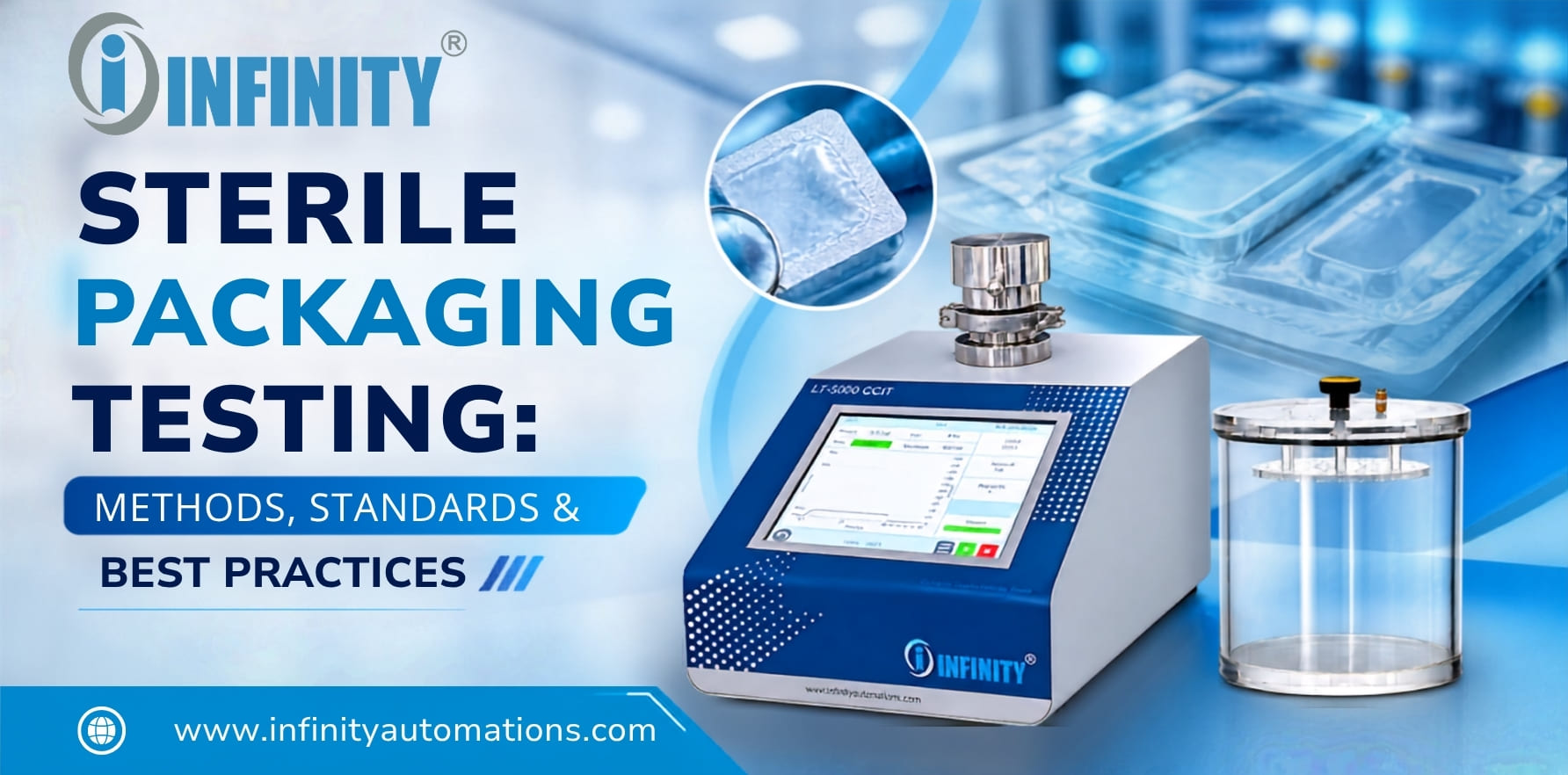
Sterile Packaging Testing is the evaluation of pharmaceutical and medical packaging systems to verify that they maintain a sterile barrier throughout their intended shelf life. It includes methods such as Container Closure Integrity Testing (CCIT), Vacuum Decay Testing, Pressure Decay Testing, HVLD, Helium Leak Testing, seal strength testing and other packaging validation procedures.
In the pharmaceutical and medical device industries, maintaining product sterility is one of the most critical quality requirements. Sterile injectable drugs, biologics, vaccines, ophthalmic solutions, diagnostic kits, implantable devices, and surgical instruments depend on packaging systems that preserve sterility from manufacturing until the point of use.
Even the smallest defect in sterile packaging can compromise the sterile barrier, allowing microorganisms, moisture, oxygen, or contaminants to enter the package. Such failures may lead to product recalls, regulatory observations, financial losses, and, most importantly, risks to patient safety.
To prevent these issues, manufacturers implement Sterile Packaging Testing throughout the product lifecycle. These testing methods verify that packaging materials, seals, and container closure systems maintain their integrity during manufacturing, sterilization, transportation, storage, and distribution.
Modern pharmaceutical and medical device manufacturers increasingly rely on Container Closure Integrity Testing (CCIT), advanced Package Leak Testing, and comprehensive packaging validation programs to ensure long-term product protection.
This guide explains the complete process of Sterile Packaging Testing, including testing methods, regulatory requirements, validation procedures, best practices, and the role of CCIT in maintaining package integrity.
What is Sterile Packaging Testing?
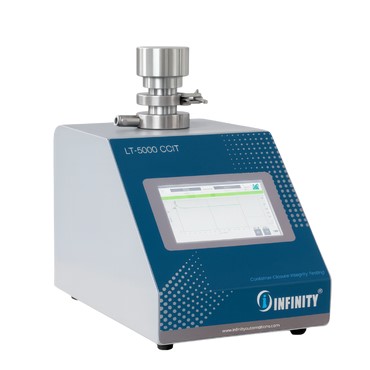
Sterile Packaging Testing is the process of evaluating sterile packaging systems to confirm that they maintain a sterile barrier throughout the product's intended shelf life.
Testing verifies that packaging can withstand sterilization, transportation, storage, handling, environmental conditions, and product usage.
The objective is to ensure that microorganisms and contaminants cannot enter the package before it is opened by the end user.
Sterile packaging testing is performed throughout product development, validation, routine manufacturing, and stability studies.
Why Sterile Packaging Testing Matters
The packaging system is the final protective barrier between a sterile product and the external environment.
Failure of this barrier can result in:
- Loss of sterility
- Product contamination
- Patient safety risks
- Product recalls
- Regulatory non-compliance
- Financial losses
- Brand reputation damage
Routine Medical Packaging Testing and Pharmaceutical Packaging Testing help manufacturers detect packaging defects before products reach the market.
Understanding Sterile Barrier Systems
A sterile barrier system consists of packaging components designed to maintain product sterility until use.
Examples include:
- Glass vials with rubber stoppers
- Ampoules
- Pre-filled syringes
- IV bags
- Blow-Fill-Seal (BFS) containers
- Sterile pouches
- Medical device trays
- Tyvek® packaging
- Flexible sterile packaging
- Blister packs
Every packaging system must be validated to ensure it consistently protects the product.
Packaging Validation
Packaging validation demonstrates that a packaging system performs as intended under real-world conditions.
A complete validation program typically includes:
Design Qualification (DQ)
Verifies that the package design meets intended requirements.
Installation Qualification (IQ)
Confirms that packaging equipment is installed correctly.
Operational Qualification (OQ)
Demonstrates that equipment performs within specified operating ranges.
Performance Qualification (PQ)
Validates that packaging consistently protects products during routine manufacturing.
Stability Studies
Evaluate package performance throughout the product's shelf life.
Transportation Validation
Confirms that packaging withstands shipping and distribution conditions.
Sterile Packaging Testing Methods
Multiple testing methods are used depending on the product, package design, and regulatory requirements.
Common techniques include:
- Container Closure Integrity Testing (CCIT)
- Vacuum Decay Testing
- Pressure Decay Testing
- High Voltage Leak Detection (HVLD)
- Helium Leak Testing
- Dye Ingress Testing
- Bubble Emission Testing
- Seal Strength Testing
- Peel Testing
- Burst Testing
Each method serves a specific purpose within the overall packaging validation strategy.
Container Closure Integrity Testing (CCIT)
Container Closure Integrity Testing (CCIT) is one of the most important methods used in modern pharmaceutical packaging validation.
CCIT verifies that the container closure system maintains a sterile barrier by detecting microscopic leaks that could compromise sterility.
Unlike many traditional methods, deterministic CCIT technologies provide objective, repeatable, and highly sensitive results.
Vacuum Decay Testing
A non-destructive deterministic method that measures pressure changes within a vacuum chamber to detect leaks.
Suitable for: Vials, BFS containers, cartridges, plastic bottles, and IV bags.
Pressure Decay Testing
Measures pressure loss from pressurized containers over time.
Applications: Plastic pharmaceutical packaging, medical devices, and rigid containers.
High Voltage Leak Detection (HVLD)
Detects leaks in liquid-filled pharmaceutical containers using controlled electrical conductivity.
Common applications: Injectable drugs, pre-filled syringes, ampoules, and BFS containers.
Helium Leak Testing
Uses helium tracer gas to detect extremely small leaks with exceptional sensitivity.
Typically used for: Validation studies, high-value products, and specialized pharmaceutical applications.
Traditional Package Leak Testing Methods
Although deterministic technologies are increasingly preferred, traditional methods remain useful in specific applications.
Dye Ingress Test
Packages are exposed to colored dye under vacuum or pressure. Dye entering the package indicates leakage.
Advantages: Low equipment cost and simple procedure.
Limitations: Destructive, operator dependent, and lower sensitivity.
Bubble Emission Test
Packages are submerged in water while internal pressure is applied. Escaping bubbles indicate leakage.
Applications: Development studies and laboratory testing.
Burst Testing
Measures the pressure required to rupture flexible packaging.
Used for: Flexible medical packaging, pouches, and seal validation.
Seal Strength Testing
Measures the mechanical strength of package seals.
Commonly used during: Packaging development, validation, and routine quality control.
Deterministic vs Probabilistic Sterile Packaging Testing
Sterile packaging testing methods can be categorized into deterministic and probabilistic approaches.
| Type | Methods in This Article | Characteristics |
|---|---|---|
| Deterministic | Vacuum Decay, Pressure Decay, HVLD, Helium Leak | Objective and repeatable measurements |
| Probabilistic | Dye Ingress, Bubble Emission | More dependent on test conditions and interpretation |
| Mechanical | Burst, Seal Strength | Evaluates physical package/seal performance |
Medical Packaging Testing
Medical devices require packaging systems that maintain sterility until clinical use.
Common products include:
- Surgical instruments
- Catheters
- Implants
- Diagnostic devices
- Orthopedic products
- Disposable medical supplies
Testing ensures packages withstand sterilization and transportation without compromising sterile barrier integrity.
Pharmaceutical Packaging Testing
Pharmaceutical products require extensive packaging qualification.
Applications include:
- Injectable drugs
- Vaccines
- Biologics
- Ophthalmic solutions
- Lyophilized products
- Infusion bags
- Cartridges
- Pre-filled syringes
Routine testing verifies package integrity before products reach patients.
Regulatory Standards
Sterile packaging must comply with international quality and regulatory requirements.
USP <1207>
USP <1207> strongly encourages deterministic Container Closure Integrity Testing methods whenever feasible. The chapter emphasizes objective measurements, high sensitivity, repeatability, and scientific validation.
FDA Guidance
The U.S. Food and Drug Administration expects manufacturers to validate packaging systems and demonstrate container closure integrity throughout the product lifecycle.
EU GMP Annex 1
EU GMP Annex 1 requires manufacturers to implement scientifically justified contamination control strategies, including validated packaging integrity testing for sterile medicinal products.
ISO 11607
ISO 11607 establishes requirements for packaging used with terminally sterilized medical devices. The standard covers package design, validation, performance testing, seal integrity, and transportation validation.
ISO 13485
Supports quality management systems for medical device manufacturers and emphasizes validated production and packaging processes.
Note: Regulatory requirements and applicable standards can vary according to product type, market, packaging configuration and regulatory jurisdiction. Manufacturers should refer to the current official standards, guidance documents and applicable regulatory requirements when establishing their packaging validation strategy.
Best Practices for Sterile Packaging Testing
Implementing best practices improves product quality and regulatory compliance.
- Use Risk-Based Validation: Identify packaging risks early during product development.
- Prefer Deterministic CCIT Methods: Deterministic methods provide greater sensitivity, better repeatability, improved automation, and objective measurements.
- Validate Testing Equipment: All equipment should undergo routine qualification and calibration.
- Train Personnel: Operators should understand testing procedures, acceptance criteria, documentation, and equipment operation.
- Maintain Complete Documentation: Document test parameters, batch numbers, equipment identification, calibration status, operator details, deviations, and corrective actions.
- Perform Routine Monitoring: Monitor packaging quality throughout commercial production—not only during validation.
- Review Trends: Analyze historical data to identify recurring defects before they become significant quality issues.
Common Challenges in Sterile Packaging Testing
Manufacturers may encounter:
- Inconsistent seal quality
- Incorrect test method selection
- Insufficient sensitivity
- Equipment calibration issues
- Packaging material variability
- Environmental influences
- Human error during testing
A robust quality system helps minimize these risks.
Industry Applications
Sterile packaging testing is widely used across regulated industries.
- Pharmaceutical Manufacturing: Injectable drugs, vaccines, biologics, and ophthalmic products.
- Biotechnology: Cell therapies, gene therapies, and protein formulations.
- Medical Device Manufacturing: Surgical kits, implants, catheters, and disposable medical products.
- Diagnostics: Test kits, sample collection devices, and laboratory consumables.
- Contract Manufacturing Organizations (CMOs): Support packaging validation and routine quality testing for multiple pharmaceutical clients.
Sterile Packaging Testing Method Comparison
| Method | Type | Non-Destructive | Typical Applications |
|---|---|---|---|
| Vacuum Decay Testing | Deterministic | Yes | Vials, IV Bags, BFS |
| Pressure Decay Testing | Deterministic | Yes | Plastic Containers |
| High Voltage Leak Detection | Deterministic | Yes | Liquid Injectables |
| Helium Leak Testing | Deterministic | Yes | Validation Studies |
| Dye Ingress Test | Probabilistic | No | Laboratory Testing |
| Bubble Emission Test | Probabilistic | No | Development Testing |
| Burst Testing | Mechanical | No | Flexible Packaging |
| Seal Strength Testing | Mechanical | No | Packaging Validation |
Future Trends in Sterile Packaging Testing
Advances in Industry 4.0 and pharmaceutical automation continue to transform packaging quality assurance.
Emerging technologies include:
- AI-powered defect detection
- Automated CCIT systems
- Robotic sample handling
- Cloud-based quality analytics
- IoT-enabled inspection systems
- Predictive maintenance
- Electronic batch records
- Digital validation documentation
- Real-time production monitoring
These innovations improve testing efficiency while strengthening data integrity and regulatory compliance.
About Infinity Automation Systems Private Limited
Infinity Automation Systems Private Limited develops industrial automation and testing solutions for regulated manufacturing environments, including leak testing, packaging integrity testing and automated inspection applications.
Need Reliable Sterile Packaging and Leak Testing Solutions?
Ensure package integrity with reliable testing solutions for pharmaceutical and medical packaging. Discuss your application, package type, testing requirements and validation objectives with Infinity Automation Systems Private Limited.
Discuss Your Requirement → Explore Leak Testing Solutions →Conclusion
Sterile Packaging Testing is a cornerstone of quality assurance in pharmaceutical and medical device manufacturing. By verifying the integrity of packaging systems throughout development, validation, production, and distribution, manufacturers can ensure that sterile products remain protected until they reach healthcare professionals and patients.
Modern testing strategies combine Container Closure Integrity Testing (CCIT), advanced Package Leak Testing, seal validation, and comprehensive packaging qualification to detect defects that could compromise Sterile Package Integrity. Deterministic technologies such as Vacuum Decay Testing, Pressure Decay Testing, High Voltage Leak Detection, and Helium Leak Testing offer superior sensitivity, repeatability, and regulatory acceptance compared to many traditional methods.
By following international standards such as USP <1207>, EU GMP Annex 1, ISO 11607, and ISO 13485, and implementing robust validation and monitoring programs, organizations can strengthen product quality, maintain compliance, reduce contamination risks, and improve patient safety.
As pharmaceutical manufacturing continues to evolve with automation, AI, and Industry 4.0 technologies, advanced Pharmaceutical Packaging Testing solutions will remain essential for protecting sterile products and supporting global regulatory expectations.
Contact Infinity Automation Systems to discuss your sterile packaging testing requirements.
Frequently Asked Questions (FAQs)
Sterile Packaging Testing verifies that pharmaceutical and medical packaging maintains a sterile barrier throughout the product's shelf life and prevents contamination.
Container Closure Integrity Testing detects microscopic leaks in container closure systems, helping ensure that products remain sterile and meet applicable regulatory requirements.
Sterile Packaging Testing is a comprehensive validation program that evaluates the packaging system, while Package Leak Testing specifically identifies leaks or defects that could compromise package integrity.
Medical device manufacturers, pharmaceutical companies, biotechnology firms, diagnostic laboratories, and contract manufacturing organizations perform Medical Packaging Testing.
Common standards and regulatory guidance discussed in this article include USP <1207>, FDA guidance, EU GMP Annex 1, ISO 11607, and ISO 13485.
Sterile Packaging Testing focuses on verifying that packaging maintains a sterile barrier and protects products from contamination. Pharmaceutical Packaging Testing is a broader term covering packaging qualification and testing activities for pharmaceutical products.
Deterministic methods use objective physical measurements to detect package leaks and generally provide greater repeatability and sensitivity. Probabilistic methods such as dye ingress and bubble emission depend more heavily on test conditions and operator interpretation.
Vacuum Decay Testing is identified as a non-destructive deterministic method suitable for vials, BFS containers, cartridges, plastic bottles and IV bags. The appropriate method depends on the package design, product characteristics and validation requirements.
Not necessarily. Vacuum Decay Testing, Pressure Decay Testing, High Voltage Leak Detection and Helium Leak Testing can be non-destructive depending on the application and test configuration.
Sterile packaging testing should be performed throughout product development, validation, routine manufacturing and stability studies, with routine monitoring during commercial production.
The appropriate method depends on package design, product type, package material, leak sensitivity requirements, whether the test should be destructive or non-destructive, regulatory requirements and the stage of packaging validation.